


Our services
What people say about us
See what the people and companies who chose us have to say. Their experiences show the value of our work, every day.

P. Colamussi
Hardworking digital professionals who cover everything from web marketing to building incredible web portals. Always available and ready to take on new challenges. I can't recommend them enough!
R. Zampetti
I've been working with the team for about two years on graphics, brochures and, most recently, my company's new website.
Davide and his team offer a 100% serious and professional service. They meet deadlines, know how to organize and tastefully adapt the content they're given, and provide full support once the work is delivered. Competition in this market is high and I've worked with several agencies, but I can assure you it's not at all easy to find partners like them. I absolutely recommend them.
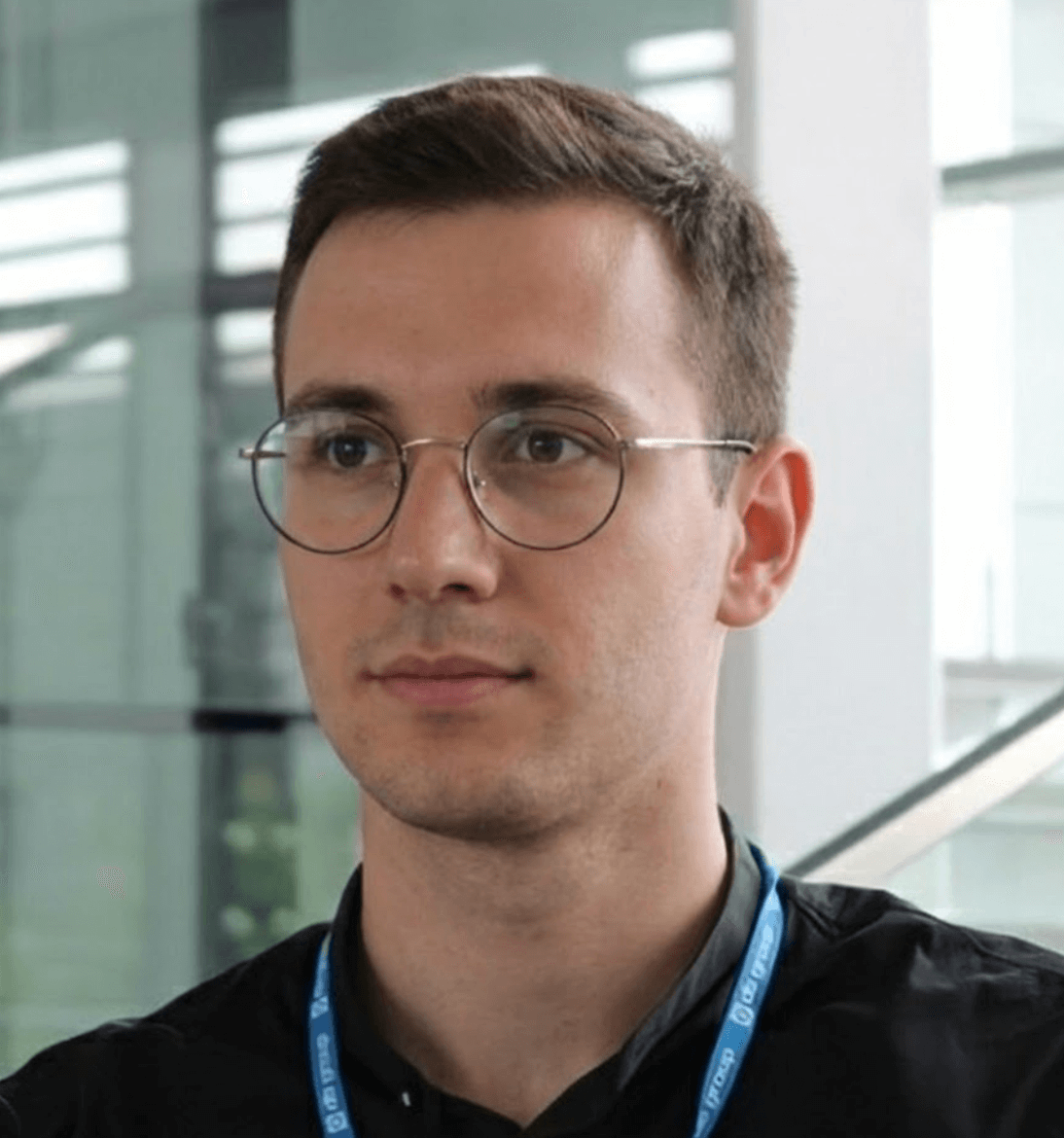
D. Bricco
We work with them on many projects, especially when our clients come to us with very specific requests. With them, you can always count on a super precise, skilled and professional partner for your agency.

Alessia Agazzi
Whenever I have a question, the SHM Studio team is always available and ready to answer. Even after the website was delivered, Davide has supported me (and still does) with patience and professionalism. I truly feel supported! Highly recommended for anyone looking for continuous, reliable support.

Matteo Rinaldi
When I decided to refresh my company's image, I was full of
doubts. SHM Studio guided me with patience, listening to every need and
proposing innovative solutions. The new website received compliments from all
our customers. A truly positive experience!

Riccardo Boschi
Our company was practically invisible on Google, despite our efforts. With Davide's SEO consulting and SHM Studio, we finally understood where we were going wrong. After just a few months, thanks to consistent and transparent work, we reached the first page for our keywords. Highly recommended for anyone who wants concrete results!

5 Minute Studio
Our logistics company needed to modernize its digital approach to stay competitive. A trusted contact recommended SHM Studio, a web agency in Milan, and after an initial consultation we decided to move forward. Their team delivered a complete digital audit, redesigned our website to improve usability and implemented an SEO strategy that quickly improved our search engine rankings. They also set up analytics tools so we could track results. The improvements in our online visibility and lead generation were clear and measurable. I recommend SHM Studio to any company looking for expert digital guidance and concrete results.

A property on the Amalfi Coast, a city hotel in Naples and a farm stay in the Beneventano hinterland all sell the same region to guests who couldn't be more different. Tourism marketing in Campania has to account for that gap: on the coast, you compete with thousands of short-term rentals and the booking portals, while in the inland areas you struggle just to be found from abroad. Either way, the booking is decided online, among reviews, maps and search results.
We work with hotel groups, accommodation providers and tourism operators in Campania, bringing together reputation, a website with a booking engine, SEO and campaigns. The goal is easy to state and harder to achieve: shifting part of your demand from intermediated channels to your own direct channel, with one senior person as your point of contact for the whole project.

What we offer companies looking for tourism marketing
Reputation and reviews
In Campania, many guests choose after reading what previous guests had to say. We organize review collection after the stay, replies in a tone consistent with your brand, and your Google profile, so that reviews become a selling point rather than a risk to keep in check. Photos and replies matter as much as the rating.
Hotel website with booking engine
We design websites for hotels and groups that take guests to the booking with no detours: clear availability, better terms than the portals, and room pages that answer questions before they turn into emails. The booking engine stays the one you already use, integrated cleanly and with measurable results.
Hotel SEO by destination
People searching for Positano, Ischia or the Cilento aren't searching for your property's name. With an SEO strategy built on real searches by location, season and type of vacation, your pages show up while guests are still deciding where to go, not just after they've chosen where to sleep.
Content for the inland areas
Caserta, Benevento and Avellino have heritage, historic villages and food and wine, but little international visibility. With copywriting, we create multilingual content about itineraries, experiences and reasons to stay, so your property becomes the gateway to a region that international travelers don't know yet.
Campaigns targeting international demand
With Meta campaigns, you reach travelers from your target markets during the inspiration phase; with Google Ads, you cover searches for your own name, so people already looking for you don't land on a portal page that charges you a commission. Every booking is tracked back to the campaign that generated it.
Groups with multiple properties
If you run hotels across Naples, the coast and the inland areas, you need unified direction: branding that ties your properties together without flattening them, a shared content system, and automations with AI to handle requests in multiple languages without overloading the front desk, even in peak months.
Tourism in Campania: coast, city and inland areas
Tourist Campania isn't a single market. On one side, Naples and its metropolitan area, the Sorrento Coast and the islands of the Gulf; on the other, the Amalfi Coast and the Cilento in the province of Salerno; and then an inland area that largely remains outside international flows. According to Banca d'Italia, L'economia della Campania (2026), in 2025 foreign overnight stays grew by 7.5% and spending by foreign travelers by 5.3%. On the Salerno side, the press release from the Camera di Commercio di Salerno and Unioncamere Campania (2026) reports over 1.4 million arrivals and more than 5.1 million overnight stays in the province for 2024.
There's another indicator that hotel operators know well, though: the weight of short-term rentals. The Report congiunturale turismo Campania by Unioncamere Campania and Isnart (2024), based on AirDNA data, counts 36,780 Airbnb listings and 2,277,413 booked nights between January and August 2024 in the province of Naples alone. The chart compares the provinces of Campania: it covers Airbnb listings, not official hotel figures, but it clearly shows where non-hotel competition is concentrated and how far behind the inland areas remain.
The same report shows where destination choice begins: 52.3% of Italians and 52% of foreign travelers get their information from the internet, social media and reviews, and the most-used review platforms are Google (39.3%) and TripAdvisor (35.5%). For a hotel in Campania, this translates into a few clear priorities:
- defend direct bookings where short-term rentals are densest, meaning Naples and the coast;
- focus on reputation and structured SEO, because comparison happens before guests even open your website;
- bring multilingual content to the inland areas, where growth in international visitors is still limited.
The picture also varies widely within the same province, and ignoring that is the most common mistake in mass-produced tourism campaigns. In Sorrento or Capri, international demand is there, but every vacant room competes with dozens of alternatives just a click away; in the Cilento, the season is shorter and the story of the region matters more than price; in Caserta or Irpinia, the challenge is getting the destination onto the list of people planning a trip to Italy. That's why we don't work with a standard package: we start from where your property stands today and where you're losing bookings.
Incentives for tourism marketing in Campania in 2026
As of 10/06/2026, the Ministero del Turismo call for developing the tourism offering is closed, while the SIMEST subsidized loan for international trade fairs and events remains open on a first-come basis.
| Tool | Status | Period | What it covers |
|---|---|---|---|
| Avviso per il sostegno allo sviluppo dell'offerta turistica of June 18, 2026 (prot. no. 96263) Ministero del Turismo / Invitalia | Closed | deadline extended from 5:00 p.m. on September 15, 2026 to 5:00 p.m. on September 30, 2026 | Renovation and energy upgrades of accommodation facilities, including digital and home automation solutions: it funds investments, not marketing services. |
| SIMEST subsidized loan (Fondo 394/81) - Trade fairs and events SIMEST (Gruppo CDP) / MAECI | Open | First-come applications (no deadline stated on the page); special conditions for India from September 16, 2025 | Subsidized loan for participation in up to 3 international trade fairs or events and promotional activities, up to €500,000, with a non-repayable portion of up to 10% (20% for businesses in Southern Italy on certain markets). It covers promotional expenses tied to trade fairs and events, not general digital marketing services. |
It's important to be clear about what they cover. The call managed by Invitalia, closed at 5:00 p.m. on September 30, 2026 after the extension, allocated 109 million to the renovation and energy upgrade of accommodation facilities with digital and home automation solutions: investments in the property, not marketing services. SIMEST's Fondo 394/81 funds participation in up to 3 international trade fairs or events and the related promotional activities, with a non-repayable portion, but it isn't a voucher for a website, SEO or campaigns. If your property attends industry trade fairs abroad, SIMEST can ease those costs; work on your website, content and campaigns should instead be planned as your own investment, without counting on a grant. Before setting a budget, check the requirements in the official text: we don't assume any marketing expense is eligible.
Case study: Spaesati, tourism marketing in Tuscany
Spaesati is a tourism project in Tuscany, so it's in a different region and has no connection to Campania. We handled the editorial design, keyword research, SEO, and social and community management, with the goal of giving the content a structure that follows how people search for a place to discover. There are no published numerical results for this project, and we won't invent any.
Why does it matter to you? Because many Campania properties, especially inland, share the same problem: a rich territory that is described online too little and too poorly. Starting from travelers' searches, organizing content by theme, and building a community around the place is the method we would bring here too. We don't promise you the same outcomes, because the market and the starting point are different: we show you how we work. You can find the project in the Spaesati portfolio.
Want to know how many bookings you could bring back to your direct channel? Book a free 30-minute audit: together we'll review the website, reputation, and channels of your property in Campania.
FAQ
Our FAQ section offers clear, concrete answers for anyone who has heard about web agencies and wonders what a team of professionals can really do for them.
Tourism marketing for a hotel in Campania includes analyzing the markets your guests come from, a hotel website with an integrated booking engine, hotel SEO for the locations and periods that matter, management of reviews and your Google profile, search and social campaigns, and automations for inquiries. You don't need to start with everything at once: for a hotel on the Coast, the priority may be reducing dependence on booking portals; for an inland property, visibility abroad; for a resort, selling experiences and extra services. We decide this together during a free 30-minute audit, looking at the sales data you already have.
You need several levers working together. A website that makes booking direct easier and more convenient than booking on the portal; a polished presence where guests compare, meaning Google and review platforms; campaigns that cover searches for your name. In areas with plenty of non-hotel accommodation, like the province of Naples, it also matters to explain concretely what a hotel offers compared with an apartment: services, support, flexibility. Portals remain useful for getting discovered, but they shouldn't be your only route.
It depends on who already chooses you and who you want to reach. English is the starting point for almost everyone; other languages are added by looking at where your guests come from and at searches in the markets you want to open. Better a few well-crafted languages, with pages written for that audience, than many machine translations nobody reads. For properties in inland areas, where international demand is weaker, multilingual content is often the first investment to make, even before campaigns. The same goes for review replies: answering in the guest's language is a sign of care that readers notice right away.
As of 10/06/2026, the Avviso per il sostegno allo sviluppo dell'offerta turistica from the Ministero del Turismo and Invitalia is CLOSED: the deadline, extended from September 15, expired at 5:00 p.m. on September 30, 2026, and it covered investments in facilities, not marketing. The SIMEST subsidized loan for international trade fairs and events is OPEN on a first-come basis, with no stated deadline, and covers promotional expenses tied to those events. Neither is a grant for a website, SEO, or campaigns: always check the requirements in the official text.
We work with established companies, and a group needs method before tools. We start with an analysis of all properties: sales channels, the weight of portals, reputation, pages that work and pages that bring in nothing. From there we define what stays common, like the group brand and the booking system, and what changes from one destination to another, like languages, content, and campaigns. You get a senior person as your direct contact and a single work plan, whether your properties are in Naples, on the Salerno coast, or inland.
By treating them as part of your marketing, not as a problem to check on once in a while. In Campania, many guests choose a property after reading reviews on Google and TripAdvisor, so what counts is how many you have, how recent they are, and how you reply. We set up a flow that invites satisfied guests to leave a review after their stay, help your team reply consistently, including in your guests' languages, and take care of your property's Google profile. A strong reputation also boosts your SEO strategy and bookings from your website.

