



Our services
What they say about us
Discover what people and companies who have chosen us say about us. Their experiences tell the value of our work, every day.

P. Colamussi
Digital professionals who work hard, ranging from web marketing to the development of incredible web portals. Always available and ready to take on new challenges. I couldn't recommend them more!
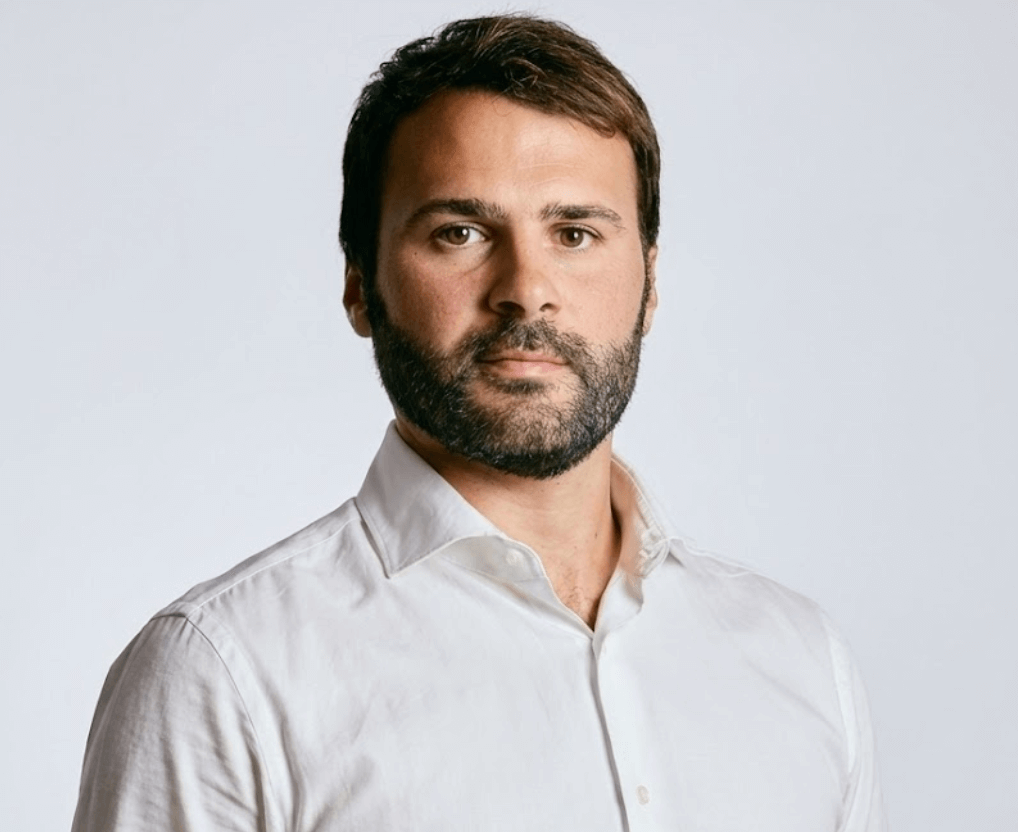
R. Zampetti
I have been collaborating with the guys for about two years for the creation of graphics, brochures and, last but not least, for my company's new website.
Davide and the guys offer a 100% serious and professional service. They respect delivery times, know how to organize and tastefully modify the content provided, and offer complete assistance once the work is delivered. Competition is high in this market and I have worked with several agencies, but I assure you it is not at all easy to find partners like them. I absolutely recommend them.
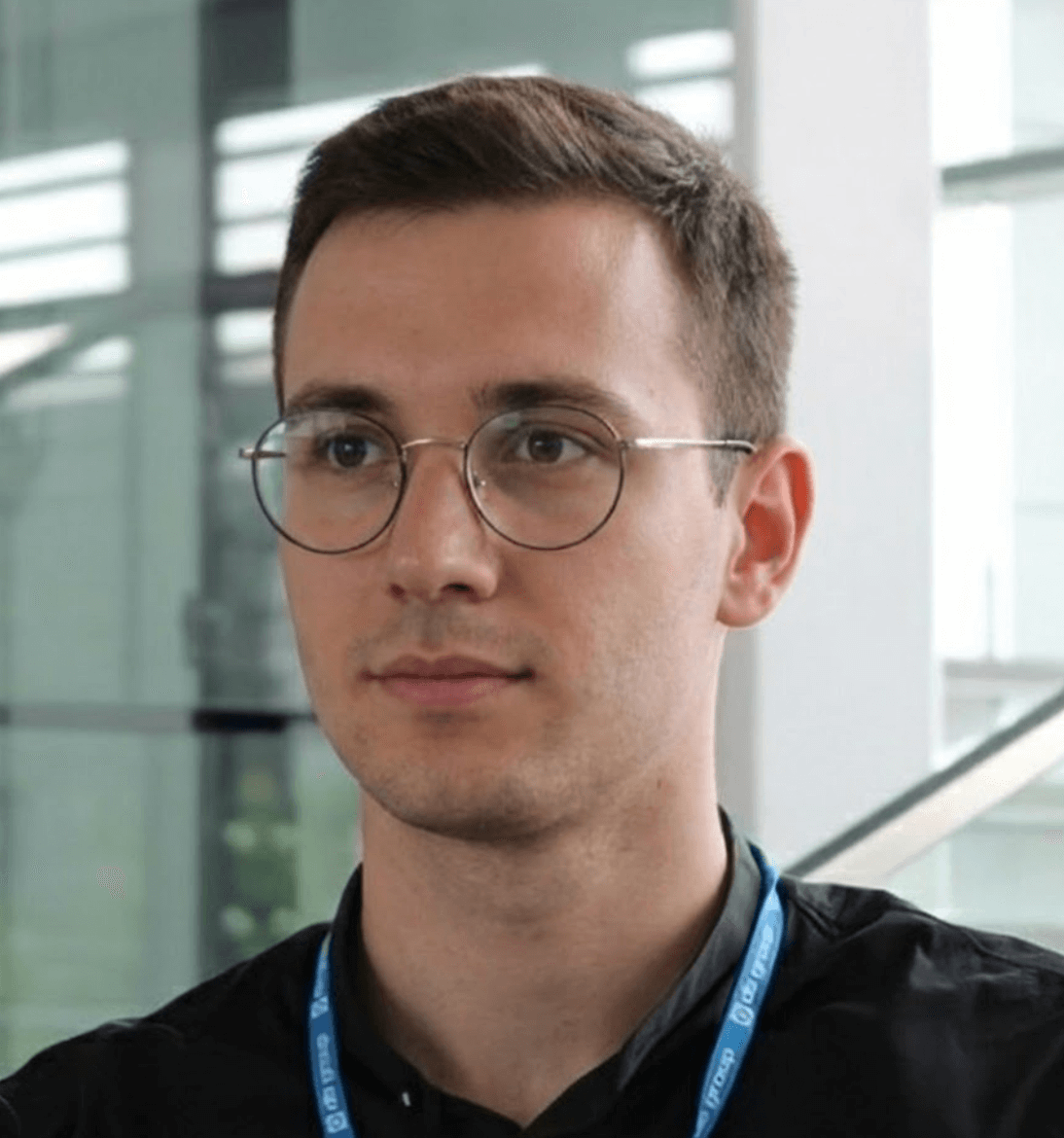
D. Bricco
We collaborate with them for various projects, especially when our clients come to us with very specific requests. With them you can always count on a super precise, competent and professional partner for your agency.

Alessia Agazzi
Every time I have a doubt, the SHM Studio team is always available and ready to answer. Even after the site delivery, Davide followed me (and still follows me) with patience and professionalism. I feel truly supported! Highly recommended for those looking for continuous and reliable assistance.
Matteo Rinaldi
When I decided to renew my company's image, I was full of
doubts. SHM Studio followed me patiently, listening to every need and
proposing innovative solutions. The new website has received compliments from all
our clients. A truly positive experience!
Riccardo Boschi
Our company was practically invisible on Google, despite our efforts. With the SEO consultancy from Davide and SHM Studio, we finally understood where we were going wrong. After a few months, thanks to constant and transparent work, we reached the first page for our keywords. Highly recommended for those who want concrete results!

5 Minute Studio
Our logistics company needed to modernize its digital approach to stay competitive. A trusted contact recommended SHM Studio, a web agency in Milan, and after an initial consultation, we decided to proceed. Their team provided a comprehensive digital audit, redesigned our website to improve usability, and implemented an SEO strategy that quickly improved our search engine rankings. They also set up analytics tools to allow us to monitor the results. The improvements in our online visibility and lead generation were evident and measurable. I recommend SHM Studio to any company looking for expert digital guidance and concrete results.







Doing tourism marketing in Rome means competing in the city with the most visitors in Italy, where just a stone's throw from your hotel there are other structures, apartments, and holiday homes chasing the same guest. In such a crowded market, it's not enough to just be there: you need to be chosen, and ideally chosen on your own website instead of on a portal that takes a commission on every night sold. With the Jubilee behind us, the city's growth is slowing down, and the game is shifting to occupancy, rates, and brand recognition.
We work alongside hotel chains, established independent hotels, and Roman hospitality companies that want more direct bookings and a clear positioning against the competition. Each project has a senior professional as a direct point of contact, who knows your numbers and coordinates your website, content, and campaigns without intermediaries. We don't offer you a standard package: we start from how you sell your rooms today and who is buying them.

What we offer to companies looking for tourism marketing
A positioning that holds up to comparison
In Rome, guests always have an alternative on the same street. Before talking about channels, let's define why they should choose you: type of traveler, neighborhood, services, tone of voice. With the Branding we turn these choices into a consistent identity across your website, social media, and materials, so the group stops competing just on price and a few extra photos.
Booking engine and direct rate
The hotel booking engine is the point where the reservation is won or lost. Let's rethink the Websites starting from there: availability visible right away, clear terms, concrete perks for those who book directly, friction-free payment from a smartphone. Every unnecessary step means a guest who goes back to the OTA to complete the purchase and leaves you with a commission to pay.
Hotel SEO by neighborhood and reason for travel
No one wins generic searches for Roman hotels against the big portals. You win on more specific searches: the neighborhood, proximity to a museum or station, a business trip, a family with children. With a SEO Strategy we build the pages that answer these questions, in each language of your markets.
Presence in AI assistant responses
More and more travelers ask an assistant where to sleep near a place or which hotel to choose for a city weekend. With SEO for AI we make your content clear, verifiable, and citable, so your property's name also shows up in generated answers and not just in classic search engine results.
Campaigns in foreign markets
With the google ads campaigns you dominate searches for your name, where booking sites buy ad space ahead of you, and intercept those looking for Rome from the countries that bring you the most guests. The Meta campaigns they work on remarketing: they bring back to the site those who looked at rooms without booking and those who have already stayed with you.
Group and event requests without bottlenecks
Quotes for groups, corporate events, and questions in different languages at all hours: the front office cannot handle everything with the same care. With AI and automation we sort inquiries, draft responses that match your rates, and hand off only what deserves immediate attention to the sales team.
Tourism in Rome after the Jubilee: numbers and market pressures
According to data from the Lazio Tourism Bilateral Body published by Turismo Roma (Rome Capital), 2025 , the city recorded 22.9 million arrivals and 52.92 million overnight stays in 2025. Of those arrivals, 12 million come from abroad: more than half of your potential guests search, compare, and book in a language other than Italian, often starting from a booking app.
Growth is still there, but it is slowing down. According to EBTL once again, in 2025 arrivals increased by 3.42% and overnights by 2.87%, following a +5.63% in arrivals in 2024. With the conclusion of the Jubilee year, hotels and groups must defend their occupancy and rates without the boost of a major event, and every night sold through an intermediary weighs heavier on profit margins.
To compare Rome with other cities, a homogeneous source is needed. In the survey ISTAT, Statistica Today – Tourism 2024 , Rome is the top Italian municipality with 42,705,319 tourist nights in 2024, 9.2% of the national total and over triple that of Milan. ISTAT and EBTL data follow different scopes and methods, so they shouldn't be added together or compared: the chart below uses only ISTAT data on the main tourist municipalities.
What does this mean for a Roman property? The market is saturated: in addition to hotels, there's a very strong non-hotel offering, and without a recognizable brand, only price remains. Foreign demand is dominant, and without multilingual SEO and direct booking, foreign guests almost always go through an OTA. Finally, growth alone no longer compensates for commissions. That's why the work we propose for Rome starts with brand differentiation and goes all the way to the booking engine, instead of adding channel after channel.
Before proposing any intervention, therefore, we place your data alongside those of the city: direct booking share, guest origin, average length of stay, and the weight of commissions on room revenue. The comparison shows where your property follows the market and where it is losing ground compared to local competitors. From there we choose the priorities, which for a hotel in the historic center and one near the Fair or the airport rarely match.
Incentives for tourism marketing in Rome in 2026
As of 10/06/2026, the only open tool useful for Roman properties is the Lazio Region SME Digitalization Voucher 2026, with applications open until 5:00 PM on 10/29/2026. The Rome Chamber of Commerce Dual Transition Voucher 2026 has been closed since 09/22/2026.
| Tool | Status | Period | What it covers |
|---|---|---|---|
| Double Transition Voucher Call 2026 Chamber of Commerce of Rome | Closed | from 2:00 PM on September 15, 2026 to 2:00 PM on September 22, 2026 | SMEs of Rome and its province: consulting, training, and capital goods for digital technologies and the ecological transition; vouchers up to 10,000 euros. The list of eligible technologies must be checked in the call for applications. |
| SME Digitalization Voucher 2026 Lazio Region (managed by Lazio Innova S.p.A.), PR FESR Lazio 2021-2027 | Open | Applications must be submitted starting from 12:00 PM on September 30, 2026, and by 5:00 PM on October 29, 2026. | SMEs only with operational headquarters in Lazio (large companies excluded). Predefined digital solutions with fixed contribution: Digital Diagnosis, Digital Workplace, Digital Commerce & Engagement, Cloud Computing, Cyber Security. Maximum contribution €50,000 (micro), €100,000 (small), €150,000 (medium). If the Digital Commerce & Engagement item includes marketing services, check the notice. |
An honest comment on both. The Double Transition Voucher it was aimed at micro, small, and medium-sized enterprises in Rome and its province for consulting, training, and capital goods related to digital technologies and ecological transition, with vouchers of up to 10,000 euros; we did not check whether the list of eligible technologies included marketing or e-commerce. The SME Digitalization Voucher 2026 it excludes large companies, so many structured hotel groups are left out, and it funds predefined solutions with a fixed contribution. The call for applications page does not detail whether the Digital Commerce & Engagement item includes marketing services: this must be checked in the notice before planning any expenses. If you fall under the SME category, we can help you figure out which parts of the digital project are consistent with the notice, but the final verification is up to the text of the call and your consultant.
Case study: Spaesati, tourism marketing in Tuscany
Spaesati is a tourism project in Tuscany, not Rome: the same sector in a different area. We handled editorial design, keyword research, SEO, social media, and community management. There are no published numerical results, so we aren't quoting any: we'll show you how we worked and why that method is useful here too.
The starting point was to understand how people really search for a place, with what words and with what doubts, and to organize the content accordingly, with an editorial design that encourages reading and returning. In a city like Rome, where every structure describes the same monuments, this is precisely what makes the difference: pages built on the real questions of your guests, by neighborhood and by type of trip, and a community that continues to follow you even after check-out. For a Roman group, it also means deciding which content to manage centrally and which to leave to individual properties, so that the story remains coherent without becoming generic. You can find the project in the portfolio: Spaesati .
How much does each reservation coming from a portal cost you today in commissions? Let's talk about it in a free 30-minute audit and together we identify the first steps to move demand to your site.
FAQ
The FAQ section was created to offer clear and concrete answers to those who, hearing about web agencies, might wonder what benefits they can truly gain from a team of professionals.
Tourist marketing for a Roman hotel includes positioning against hotels and short-term rentals in your area, a website with a booking engine that converts, hotel SEO for neighborhoods and travel reasons, content designed for AI assistants, campaigns on your name and foreign markets, automations to manage group and event requests. In Rome, positioning makes the difference: without a clear reason to choose you, every other investment yields less. We define priorities together, starting with a free 30-minute audit of your channels.
Cutting down the reasons why guests prefer an OTA. Anyone searching for your hotel's name must find your site first, with clear rates and a real perk for booking directly. The booking engine needs to work smoothly on smartphones and in multiple languages, because in 2025 12 million arrivals in Rome came from abroad according to Turismo Roma based on EBTL data (2025) . Then count the relationship: those who have already stayed with you should be contacted again before their next trip, not left to the OTA.
It depends on who your guests are, not on a general rule. English is essential because it's the language many non-native travelers also search in. For others, we start with data from the management system: guest nationalities, markets with the highest average value, countries you want to grow in. In Rome, where competition is strong in every language, it's worth focusing on fewer versions but written truly for that audience, with dedicated pages for neighborhoods and the travel motivations of each market.
On 10/06/2026, the Lazio Region's SME Digitalization Voucher 2026 is OPEN, with applications from 12:00 on 09/30/2026 to 17:00 on 10/29/2026, reserved for SMEs with an operational headquarters in Lazio; it remains to be verified in the notice if it covers marketing services. The Rome Chamber of Commerce's Dual Transition Voucher 2026 Call is CLOSED: the window was from 14:00 on 09/15/2026 to 14:00 on 09/22/2026. Neither of them was created to finance campaigns or SEO: always check the official text before counting on a contribution.
With a unique direction for tourism marketing and a senior person as a direct point of contact. We start with an audit of each property's channels: how much do portals weigh, where are bookings lost, which markets are most profitable. Then we define what remains common to the group and what distinguishes each hotel, we redo or optimize the websites, set up SEO and campaigns, and measure everything with shared indicators. We were founded in Milan over ten years ago and work with companies throughout Italy, with no intermediaries between you and those working on the project.
A lot, because in Rome guests compare your hotel with dozens of properties and apartments in the same area, often just by looking at pictures on a smartphone. Professional photos of rooms, common areas, and services, along with short videos about the neighborhood and the hotel experience, help convey why it's worth paying your rate. The same images are used for the website, campaigns, and social media: that's why we plan them together with the content, so each shot has a precise use and tells a recognizable brand story, not just any hotel.

