

- Why can a graphic design agency change the fate of your brand?
- What does a graphic design agency really do for your company?
- What concrete advantages does collaborating with a graphic design agency bring?
- Graphic design agency or freelance designer: which one to choose for your project?
- Your situation: when an agency is convenient and when a freelancer is?
- How are modern technologies changing the work of graphic design agencies?
- Why is the Italian design market so relevant for your choice?
- How do graphic design agencies use colors to strengthen your brand?
- What risks do you run when choosing colors for your brand?
- Packaging and advertising graphics: how much do they really influence sales?
- How to build an effective visual communication strategy?
- Three concrete scenarios: how much is graphic design worth for an e-commerce store, a professional studio, and a manufacturing company?
- What mistakes to avoid when choosing or working with a graphic design agency?
- How to tell if your graphic design agency is really working?
- So, is it worth investing in a graphic design agency for your company?
- How we see it at SHM
- Frequently Asked Questions
- A graphic design agency is a strategic partner, not just a logo supplier: it manages visual identity, websites, campaigns, and integrated communication.
- Choosing between an agency and a freelance designer depends on your budget, project scope, and coordination needs: both options have real benefits.
- Color psychology is no theory: 90% of quick product judgments are based on color, and a consistent palette boosts brand recognition by up to 80%.
- Italian design leads Europe with 19.8% of the EU sector's turnover: relying on qualified professionals is a choice supported by a solid ecosystem.
Updated October 10, 2026
94% of first impressions about brands depend on the design, not the product. If your business hasn't invested in professional visual communication yet, you're leaving the first move to your competitors.
Why can a graphic design agency change the fate of your brand?
Visual communication influences purchasing decisions even before the customer reads a single word. A graphic agency turns this lever into a measurable competitive advantage.
Whatever your business, graphic design is the first filter through which customers judge you. According to Stanford Web Credibility Research , 94% of consumer first impressions are design-related. People judge before they even read the content.
An graphic design agency is not simply a logo provider to call when needed. It is a strategic partner that works in synergy with your company to develop a coordinated image that reflects values and goals. The designers immerse themselves in your reality, then transform ideas into visible and appreciable results for customers.
Focusing on design means accessing an ecosystem of creative talent capable of conveying the right message in the most effective way. It is not just about aesthetics: it is about connecting, telling a story, and standing out in a crowded market.
These numbers are not just for show. They mean that every euro invested in professional design works quietly in the background every time a potential customer lands on your website, opens a quote, or sees your packaging on the shelf.
What does a graphic design agency really do for your company?
A graphic agency covers the entire visual communication chain: from brand identity to the website, from advertising graphics to packaging, up to strategic consulting.
Many business owners think a graphic design agency is only good for a logo. In reality, services cover a company's entire visual life. Here is a map of the main areas of intervention.
| Area of intervention | What it includes | Who mainly needs it |
|---|---|---|
| brand identity | Logo, color palette, typography, brand manual | Startups, companies undergoing rebranding |
| graphics for websites | Layout, UI, editorial design, landing pages | E-commerce, companies with a showcase site |
| Advertising communication | Digital ads, banners, social campaigns | Those who invest in digital advertising |
| Packaging and print | Labels, packaging, brochures, catalogs | Manufacturers, retail, grocery |
| Social media graphics | Templates, posts, stories, visuals for campaigns | Brand with an active social media presence |
| Integrated visual consulting | Color strategy, visual storytelling, graphic audit | Growing or repositioning companies |
A specialized team manages all design phases: from logo creation and visual identities to layout design for E-commerce and other digital platforms . By relying on an agency, companies can focus on their core business while creative professionals build the brand image.
More structured agencies also extend their services to website creation, to SEO optimization , to the strategic consulting and visual marketing. Digital marketing and graphic design are now two sides of the same coin.

What concrete advantages does collaborating with a graphic design agency bring?
Working with an agency means having a multidisciplinary team, visual continuity across all channels, and the ability to handle complex projects without losing consistency.
The main advantage of an agency is not the number of people involved, but the complementarity of skills . An art director, a copywriter, a web designer, and a specialist in digital advertising they work on the same project with a shared goal: brand consistency across every touchpoint (every point of contact with the customer).

| Advantage | What this means in practice | Concrete example |
|---|---|---|
| Multidisciplinary team | Each specialist works on their own area | The logo is made by the art director, the website by the web designer |
| Large-scale project management | Campaigns, launches, complete rebranding | Complete identity makeover for a B2B manufacturer |
| External perspective | They spot what the internal team misses | Identify visual inconsistencies between website and print materials |
| Integrated consulting | Not just graphics, but strategy and analysis | Visual audit + SEO and UX recommendations |
| Consistency over time | Brand archive, consistent updates | New materials always aligned with the brand manual |
An agency also offers personalized advice , ensuring that all solutions are custom-crafted and reflect the unique personality of the brand. No cookie-cutter templates here, just solutions built around your business.
Working with a graphic design agency isn't an expense, it's an investment. A targeted graphic design strategy boosts customer interactions and the chances of getting a solid return on investment.
Graphic design agency or freelance designer: which one to choose for your project?
There's no one-size-fits-all answer: the choice depends on your budget, project complexity, and how much cross-disciplinary coordination you need.
The figure of freelance designer — the independent professional who works alone — has become very popular in recent years, especially in the communications world. It offers flexibility, direct communication, and often deep specialization in a single field. But when is it really worth it compared to an agency?
| Criterion | graphic design agency | freelance designer |
|---|---|---|
| Range of services | Yes Full coverage (brand, web, ADV, print) | No, for now Usually specialized in 1-2 areas |
| cost | Higher rates, but integrated service | Hourly rate often lower |
| Response speed | Structured processes, predictable timelines | Yes More agile, available even after hours |
| Communication | Mediated by account and project managers | Yes Live with the creator |
| Project scale | Yes Ideal for large and ongoing projects | Ideal for one-off or very specific projects |
| Specialization | Multidisciplinary team | Yes Possible vertical specialization (e.g., only logos) |
| Consistency over time | Yes Archive and brand manual managed | Depends on the individual professional |
A freelancer is often the right professional for small projects or those with highly specific needs: an illustration, special packaging, a logo for an already defined brand. Direct communication — without the filters of account or project managers — can lead to a more personal and authentic result.
An agency is the winning choice when the project is large, requires multiple skills in parallel, or needs to be managed consistently over time. If you are planning a complete rebranding, launching an e-commerce site, or an integrated multi-channel campaign, a structured team makes the difference.
Timelines matter: agencies have more structured processes but also more resources. A freelancer can respond more quickly, adapting to changes on the fly. For an urgent project, the difference between waiting for a meeting and a “I’ll do it tonight” can be decisive.
Your situation: when an agency is convenient and when a freelancer is?
Use this table to quickly orient yourself based on your project's characteristics.
| Your situation | Recommended choice | why |
|---|---|---|
| Complete company rebranding | Agency | Coordination is needed between logo, website, materials, ADV |
| Logo for a new product line | Freelancer or agency | On-time project, specialization matters more than scale |
| Multi-channel advertising campaign | Agency | Requires copywriter, art director, and media buyer together |
| Social media graphics (monthly) | Freelancer | Flexibility and direct communication are top priorities |
| Website with integrated e-commerce | Agency | UX, design, SEO, and development must work together |
| Technical illustration for catalog | Specialized freelancer | Vertical expertise is more useful than agency structure |
| Visual identity from scratch for startups | Agency | You need a strategy, not just a logo |
Before choosing, ask yourself what's most important for your project: the tailor-made versatility and creativity of a single professional, or a team's ability to tackle every detail with complementary skills? Clearly express your needs and goals. This will ensure a result that reflects your company identity.
How are modern technologies changing the work of graphic design agencies?
Advanced software, artificial intelligence, and online collaboration tools have expanded creative possibilities and reduced production times, without replacing strategic judgment.

Modern tech has totally changed how a design agency works. Advanced software for digital design, animation tools, and online collaboration platforms make the design process faster and smoother. This means real-time updates, continuous revisions, and more affordable costs.
A concrete example is interactive website design , where aesthetics and functionality meet. Some agencies use augmented reality tools (technology that overlays digital elements onto the real world) to create immersive experiences. This changes how customers interact with a brand.
The Artificial intelligence opens new opportunities: generative design algorithms allow for the creation of logos and visual identities that tell a story. The most advanced agencies use AI to analyze target preferences, test color variations, and optimize layouts even before presenting them to the client. To delve deeper into how AI is also changing the work of marketing agencies, it's worth reading the guide on marketing agency and AI .
| Technology | What it allows | Practical impact for the client company |
|---|---|---|
| Vector graphics software (e.g., Adobe Illustrator) | Logos and illustrations scalable to any size | Always sharp materials, from business cards to billboards |
| UX prototyping tools (e.g., Figma) | Simulate the site before developing it | Feedback before spending on development |
| Generative AI for images | Produce visual variations quickly | More options to evaluate, reduced production costs |
| Online collaboration platforms | Real-time reviews with the client | Fewer meetings, faster approval cycles |
| Augmented reality | Immersive brand-related experiences | Interactive packaging, virtual showrooms |
Instead of relying on pre-packaged stock images, a modern creative agency produces custom graphics tailored to fit, combining art and algorithms. The result is a more authentic visual identity that's harder for competitors to replicate.
Why is the Italian design market so relevant for your choice?
Italy leads European design in revenue and employment: choosing an Italian agency means tapping into one of the most solid professional ecosystems in the world.
When you choose an Italian design agency, you aren't just picking a supplier. You're tapping into an industry that, according to data from Symbola Foundation — Design Economy 2025 , it counts 46,000 operators including companies, freelancers, and independent workers, generating an added value of 3.2 billion euros and employing over 63,000 people.
Italy leads European design with a turnover of 6.3 billion euros, equal to 19.8% of the EU total, ahead of Germany (18.9%) and France (12.8%). According to the 2026 Design Economy report by the Symbola Foundation , employment in the sector grew by +9.8% in one year, almost double the European average, with 21.5% of European design workers based in Italy.
This data is not just a source of national pride. It means the Italian market offers a wide choice of qualified professionals, with a design culture that is deeply rooted and internationally recognized. For anyone looking for an communication and marketing agency or a graphic partner, the Italian ecosystem is among the most competitive in the world.
How do graphic design agencies use colors to strengthen your brand?
Color psychology is a scientific discipline applied to design: every color choice influences customer emotions and brand perception, with measurable effects on sales.
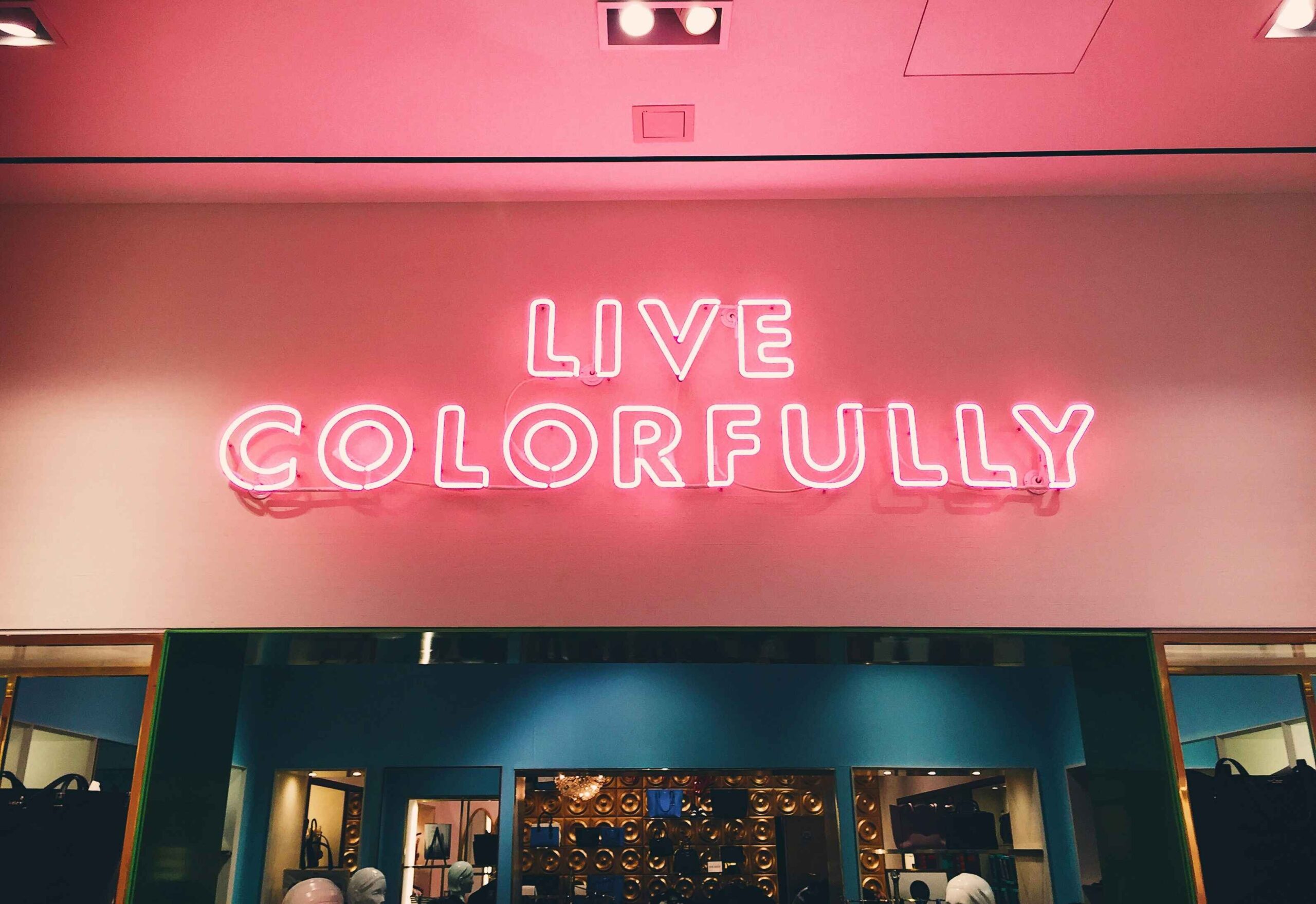
The color psychology is one of the fundamentals of professional graphic design. Experienced designers know that every hue evokes specific emotions and influences purchasing decisions. According to the Seoul International Color Expo , 90% of quick product judgments are based on color. 66% of consumers buy a product only if it comes in their favorite color.
A consistent color palette, according to Lucidpress data , brand recognition increases by up to 80%. Color is the fastest recognition signal processed by the human brain.
| Color | Evoked emotions | Sectors that use it often | Known example |
|---|---|---|---|
| Red | Energy, urgency, passion | Food, retail, promos | Coca-Cola, McDonald’s |
| Blue | Trust, security, professionalism | Finance, tech, healthcare | Samsung, PayPal, LinkedIn |
| Green | Health, nature, sustainability | Wellness, food, eco | Whole Foods, Starbucks |
| Yellow | Optimism, warmth, attention | Retail, food, kids | IKEA, Snapchat |
| Black | Luxury, elegance, authority | Fashion, luxury, premium | Chanel, Apple (dark mode) |
| Orange | Energy, movement, creativity | Sports, fitness, startups | Amazon, Fanta |
| White | Purity, simplicity, cleanliness | Healthcare, tech, minimalism | Apple, Nike (background) |
Think about how you feel when you see a bright red logo versus a soft blue one. This is not a random effect. Graphic design agencies conduct market research to understand which colors resonate best with the target audience before designing a single visual element.
A classic case is Coca-Cola : the intense red evokes energy, passion, and strength. It is well known that red can increase heart rate, creating a sense of urgency. It is no coincidence that it is the perfect color for a brand that wants to convey vitality. Similarly, financial institutions choose blue to convey trust and security.
Imagine a fitness company choosing green and orange: green symbolizes health and well-being, orange acts as a catalyst for energy and movement. Every color choice tells a story before the customer even reads a word.
What risks do you run when choosing colors for your brand?
The wrong color can make a design ineffective or, in worst cases, offend cultural sensitivities. Graphic agencies use analysis and testing tools to avoid these mistakes.

Choosing colors might seem simple, but it requires careful consideration. Graphic design agencies must navigate cultural, demographic, and brand consistency challenges. A color that evokes positivity in one region can have completely different meanings in another. This is particularly relevant for companies operating in international markets.
| Risk | Description | How it's managed |
|---|---|---|
| Cultural dissonance | A color has opposite meanings in different cultures | Market research for each target country |
| Demographic mismatch | Vibrant tones for a mature audience (or vice versa) | Target audience analysis before choosing colors |
| Inconsistency across channels | Different colors on website, print and social | Brand manual with precise color codes (HEX, CMYK, Pantone) |
| Poor readability | Not enough contrast between text and background | Accessibility testing (WCAG standards) |
| Overlap with competitors | Same palette as the market leader | Competitive audit before design |
The A/B testing — that is, showing two different versions to groups of users to measure which one works best — is an indispensable tool for avoiding color choices that clash with the brand's identity. It allows you to measure the target audience's actual reaction to various color schemes, helping to determine which option best communicates the desired message.
A graphic design agency must balance creativity and strategy, to ensure that the chosen color not only represents added value for the brand identity, but is in harmony with an increasingly globalized and diverse audience. If you want to see how this approach translates into concrete results, you can explore firsthand experience.
Packaging and advertising graphics: how much do they really influence sales?
Packaging design and advertising communication have a direct impact on purchasing decisions, with percentages exceeding 70% according to industry research.
Graphic design doesn't just live online. Packaging — the physical container of a product — is often the first physical contact between the brand and the customer. According to a Ipsos study , 72% of consumers say that packaging design significantly influences their purchasing decisions. 35% buy a product in-store specifically because of the packaging.
These numbers translate into a simple principle: graphics are not an accessory cost, they are a sales driver. A food company that invests in well-designed packaging is not just beautifying the product. It is increasing the chances that it will be chosen on the shelf over competitors.
The same principle applies to advertising graphics. Remember Apple's "Think Different" campaign? Simple yet powerful in its execution, it redefined consumer expectations. Innovative visual design elements and a strong brand identity increase memorability and trust in the brand, leading to greater engagement and, ultimately, higher sales.
According to NielsenIQ Consumer Outlook 2026 , 95% of consumers say that brand trust is a key factor when choosing a product. And trust is built, first and foremost, through consistent and professional visual communication.
For those managing social media campaigns, it's worth exploring how the new Meta AI tools for creative work and advertising insights are changing the production of visual content. And for those who work with creators, the creator partnership show how visual consistency between brand and influencer has become a key ROI factor.
How to build an effective visual communication strategy?
An effective visual strategy starts with target audience analysis, defines palettes and style, and rolls out consistently across all channels: digital, physical, and advertising.

- 1 · Agency + client Analysis and brief Objectives, target audience, brand values, and competitors are defined. This is the most important phase: all design starts here.
- 2 · Agency Research and mood board Visual references are gathered, the target audience's color preferences are analyzed, and a mood board (visual inspiration board) is built.
- 3 · Agency Concept and palette We propose 2-3 creative directions with color palettes, typography, and graphic style. The client chooses and guides the way.
- 4 · Agency + client Design and revisions Final materials are developed with review cycles. A/B testing can be used to validate color choices.
- 5 · Agency Brand manual A document is delivered with all visual rules: color codes, fonts, logo proportions, examples of correct usage.
- 6 · Client (with agency support) Application and tracking The brand is applied across all channels. The agency monitors consistency and updates materials over time.
Implementing effective communication strategies is a fundamental pillar for the success of any company. A graphic design agency offers key skills in shaping and conveying messages that resonate with the audience. Through a combination of impactful design, intriguing visual content, and integrated strategies, it ensures that the brand message is not only received but also remembered over time.
When it comes to corporate branding , the integration of advanced technologies in visual content creation enables impactful marketing. The graphic creativity backed by data and analytics, it lets your company level up. A brand with a clear visual identity is much more likely to secure loyal customers.
Three concrete scenarios: how much is graphic design worth for an e-commerce store, a professional studio, and a manufacturing company?
The value of professional graphic design varies by industry, but in every case, the impact on brand perception and conversion is measurable.
To understand where and how to invest in graphics, it helps to think in terms of scenarios. The following examples are illustrative: the numbers are meant to show the reasoning, they are not real client data.
| Company type | Typical graphic issue | Recommended action | Expected impact |
|---|---|---|---|
| Fashion e-commerce | Inconsistent product photos, uncoordinated palette | Guided photoshoot + brand palette + product sheet templates | Increase in conversion rate, reduction in returns due to unmet expectations |
| Professional firm (accountant, lawyer) | Outdated website, 90s logo, no consistency across materials | Complete rebranding: logo, website, email signature, brochure | Greater perceived credibility, more quote requests from premium clients |
| B2B manufacturing company | Unclear product catalog, no structured digital presence | Digital catalog + website with SEO architecture + graphics for trade fairs | More qualified contacts from international markets, reduction in sales time |
In the case of e-commerce, the e-commerce design and the user experience work together: a visually consistent and easy-to-navigate website reduces cart abandonment and boosts customer trust. For the professional studio, the graphics for websites is often the first touchpoint with new customers. For manufacturing, trade show graphics and catalogs remain a crucial sales tool in B2B markets today.
What mistakes to avoid when choosing or working with a graphic design agency?
The most common mistakes involve an incomplete brief, choosing solely based on price, and lacking a brand style guide to ensure long-term consistency.
Working with a design agency can yield stellar or disappointing results, depending on how the relationship is managed. Here are the most common mistakes and how to avoid them.
| Error | Why it is a problem | How to avoid it |
|---|---|---|
| Vague or missing brief | The agency works on assumptions, not real goals | Prepare a document with target audience, values, competitors, and objectives before the first meeting. |
| Choosing solely based on price | The lowest cost often means fewer work hours and fewer revisions | Evaluate the portfolio and ask for references, not just the quote |
| Changing mind mid-project | Every late change costs time and money | Approve the concept before proceeding with the final design |
| Not asking for the brand guidelines | Without written rules, every new material risks being inconsistent | Include the brand manual in the contract as a mandatory deliverable |
| Ignoring target audience feedback | The design pleases the business owner but not the final customer | Use A/B testing or surveys to validate choices before launch |
| Relying on a single agency for everything without verifying their skills | Not all agencies excel in every area | Check the portfolio specifically for the type of project you need |
How to tell if your graphic design agency is really working?
There are concrete indicators to measure the effectiveness of a design investment: from website conversion rates to brand recognition, all the way to customer feedback.
| Indicator | What it measures | How it is detected |
|---|---|---|
| Website conversion rate | How many visitors turn into customers or leads | Google Analytics, e-commerce platform |
| Average time on page | If the design keeps the user engaged | Google Analytics / Search Console |
| Brand recognition | If customers recognize the logo and colors | Surveys, brand recall tests |
| Visual consistency across all channels | If website, social media, and print materials speak the same language | Periodic visual audit |
| Client feedback | Qualitative perception of the company image | Reviews, interviews, NPS |
| Customer acquisition cost | If graphic design improves campaign efficiency | CRM, ADV platforms |
| Social media engagement | If visual content drives engagement | Instagram, LinkedIn, Facebook insights |
A good website design is also measured in terms of user experience : if users browse longer, find what they are looking for, and return, the design is working. If, on the other hand, the bounce rate (the percentage of users who immediately leave the site) is high, it could be a sign that the graphics are not clearly communicating the value of the offer.
For those running ad campaigns, it is worth considering how creative quality affects results. Tools like those described in the guide on AI agents in media buying can help optimize the visual component of campaigns too.
So, is it worth investing in a graphic design agency for your company?
It is worth it if you need to build or revamp your brand’s visual identity, manage multi-channel projects (website, social media, ads, print) and want consistent communication over time. If your industry is competitive and first impressions matter, an agency is the right partner.
A middle ground Your project is on time and well-defined (a logo, a brochure, a specific campaign): consider both an agency and a specialized freelancer. Comparing quotes and portfolios will give you the right answer for your situation.
Not yet if you have a very tight budget, the project is simple and does not require coordination among multiple disciplines. In this case, a specialized freelance designer can be the most efficient choice.
How we see it at SHM
For us, graphics aren't decoration: they're the language a company uses to speak to the world before it even opens its mouth. We believe that simplifying digital — making a website clear, a logo recognizable, a campaign visually coherent — is the highest form of creative competence. It's not about following aesthetic trends, but about building tools that work for your company every day.
In SHM Studio we work on visual identities, websites, and integrated communication with a tailored approach: no templates, no solutions copied from another industry. Every project starts from the analysis of your business, your target audience, and your goals.
We worked, among others, with an industrial components manufacturer who had a complex technical catalog that was not very effective from a commercial standpoint. We redesigned the information architecture, created guided paths for product lines and applications, and developed a functional UI that transformed the catalog into a sales tool. A case that shows how graphic design, when strategic, doesn't just beautify: it converts.
If you want to explore how we can help of your company to build a working visual identity, our services of Digital brand kit , Corporate stationery and visual identity and website design are the starting point. For an evaluation of your specific case, Contact us and let's talk about it.
To stay updated on visual marketing trends and digital campaigns, also explore our dedicated section for Marketing and ADV performance .
Frequently Asked Questions
The cost varies greatly depending on the agency's size, project complexity, and services required. A complete rebranding can start from a few thousand euros and increase significantly for large-scale projects. A freelance designer usually has lower hourly rates but may not cover all the necessary disciplines. The most important thing is to evaluate the cost-value ratio: a well-built visual identity works for years.
A complete brand identity project (logo, palette, typography, brand manual) takes an average of 4 to 12 weeks, depending on complexity and the number of revisions. The timeline extends if the project also includes the website or integrated communication materials. A clear brief and quick approvals significantly speed up the process.
Look at the portfolio and check if the agency has experience in your sector or in projects similar to yours. Ask for references and talk to previous clients. Evaluate the quality of the first meeting: a serious agency asks questions about your business before proposing solutions. Price is a factor, but it shouldn't be the only selection criterion.
Many graphic design agencies offer integrated services that include website design, social media graphics, and digital advertising materials. Some also extend to SEO consulting and digital marketing. It is important to clarify from the start which services are included and which are handled by external partners.
Put together a brief with the essential info: who you are, what you do, who your ideal client is, who your competitors are, and what you like and dislike visually. If you already have existing materials (logo, website, brochure), gather them up. The more info you share, the better the agency can tailor their solutions and cut down on revision rounds.
It's a discipline with solid scientific foundations and measurable practical applications. 90% of quick judgments about products are based on color (Seoul International Color Expo), and a consistent palette increases brand recognition by up to 80% (Lucidpress). Graphic design agencies apply it through market analysis, mood boards, and A/B testing, not as a random aesthetic choice.
Design isn't the last step to take when everything else is ready: it's the first signal your company sends to the market.
Related articles
Discover more articles exploring similar topics, selected to offer you a more complete and stimulating perspective. Each piece of content is carefully chosen to enrich your experience.



























































