

- Why does brand positioning become central in generative engines
- Brand Positioning and AI: Building an Identity That Generative Systems Recognize
- Tone of voice, brand positioning, and generative AI: how to make your company recognizable across SERPs, chatbots, and synthesized content
- How to design a tone of voice compatible with the AI era
- Glossary of terms
- Response Guidelines
- Priority themes and strategic supervision
- Semantic Authority and Brand Positioning: How to Build an Image That AIs Understand and Cite
- What elements strengthen a company's semantic authority?
- From Content to AI Citation: How to Increase Your Chances of Being Recognized by Generative Engines
- AI Tools for Visual Content in 2026: How to Improve Brand Positioning, Social Media, and Creative Production
- Midjourney
- 2. Adobe Firefly
- 3. Canva AI
- 4. Runway
- 5. Leonardo.ai
- How to integrate AI and creativity without losing brand recognition
- The future of brand positioning: designing an identity legible by humans and AI
- Comparative table of AI software dedicated to visual content creation
- FAQ: Deeper Insights into Brand Positioning in the AI Era
In the era of answer engines and chatbots, digital visibility is undergoing a radical transformation. Generative models don't just list links; they synthesize information and suggest solutions, rendering traditional SEO paradigms obsolete. For brands, the risk of invisibility is real: without brand positioning designed to be “read” by artificial intelligence, companies risk being excluded from the new customer discovery journey.
This article explores the operational strategies necessary to build recognized authority with AI models. We analyze how tone of voice becomes a technical element to ensure consistency, how semantic authority transforms the corporate website into a citable primary source, and how the adoption of cutting-edge visual tools allows for scaling creative production without trivializing brand identity. Through rigorous governance of hybrid human-machine processes, we explore how to transform AI into a competitive lever for positioning.
SHM Studio guides professionals toward implementing communication ecosystems where AI not only coexists with brand strategy but amplifies its impact, ensuring brand positioning remains a solid, readable, and decisive asset in every digital interaction.
User search behavior has profoundly changed with the spread of generative engines and AI-powered assistants. Traditional queries, built to obtain a list of results to consult, are giving way to systems capable of analyzing information and returning synthetic, already organized answers. This change also modifies how a company must work on its brand positioningDespite SEO maintaining its importance, businesses today must be able to be recognized by AI systems as relevant, reliable, and consistent entities regarding specific topics.
When a user asks a chatbot a product or a problem resolution, the generative model selects information based on the connections it can build between brands, content, and digital reputation. A company without a clear semantic presence risks being excluded from search results or associated with overly generic categories., losing the opportunity to stand out at a decisive stage of the user's buying journey.
The brand positioning assume such a technical dimension involving brand strategy, Semantic SEO, Digital content and corporate identity management.
SHM Studio, as an AI Agency, works on defining positioning, content design, and the integration of AI-based workflows to make the brand consistently readable for both humans and generative systems.
This article analyzes three central elements for building a recognizable brand in the age of generative engines: Tone of voice, semantic authority, and AI tools for creative production.
Why does brand positioning become central in generative engines
AI-powered search works through different mechanisms than traditional search: generative models, unlike keyword-based searches, analyze the overall meaning of available information to understand which sources can offer the best answer.
For a company, this means that every element of its digital presence contributes to the perception built by algorithms., whether it's about a website, published articles, pages dedicated to services, social media content, and information on external sources.
Because of these inputs, sIf a brand communicates in a fragmented way or uses overly generic messages, the AI system may have difficulty identifying the company's true area of expertise. and thus lead to a loss of recognition, with the risk that the brand will be assimilated by competitors with similar characteristics.
For a true strategy brand positioning as understood in the AI era, it is therefore necessary to provide precise coordinates to generative systems: clearly define Who is the company, what problems does it solve, what skills does it possess, and what values does it represent? This helps algorithms create correct associations, as digital reputation in 2026 will be built through strong semantic connections. Precisely for this reason, a company that produces vertical content, delves into specific topics, and maintains consistent communication increases the probability of being considered an authoritative source.
SHM Studio works on this aspect through digital communication strategies and AI integrations aimed at improving the brand's quality in the eyes of algorithms, so that every piece of content contributes to building a recognizable presence.
Brand Positioning and AI: Building an Identity That Generative Systems Recognize
AI models interpret a brand by analyzing thousands of signals distributed across various digital touchpoints. Positioning therefore depends, as we've seen, on the company's ability to maintain consistency between content, language, and available information.
On the contrary, a reality that publishes disconnected materials, uses different terminology to describe the same services, or communicates without a clear editorial direction makes classification by AI systems more complex.
Some fundamental elements are:
- Systematic publication: The constant production of vertical content allows for the creation of an information asset that is useful for both users and generative systems. Technical articles, case studies, and educational content contribute to defining the perceived level of expertise. An AI-powered editorial strategy also allows for analyzing which topics to focus on, which gaps to fill, and how to organize content more effectively.
- Linguistic coherence The terminology used by a company influences how it is associated with certain concepts. Using consistent language facilitates the recognition of the industry, expertise, and services offered.
- Vertical topics: Delving into specific themes helps a brand build a territory of expertise. A company that consistently addresses certain topics communicates a clearer specialization compared to one that publishes generic content.
- Cross-channel: coherence between website, company profiles, commercial documentation, and digital content allows for a unique identity to be maintained and facilitates the recognition of AI Overviews.
A brand positioning effectively it works like a concept map: it connects the user's need to the solution proposed by the company and makes it simpler for AI systems to understand the brand's role.
Tone of voice, brand positioning, and generative AI: how to make a company recognizable across SERPs, chatbots, and synthesized content
The tone of voice represents one of the most important elements in building digital identity. In the generative environment, it also takes on a technical function because it contributes to determining how a brand is perceived and reproduced by AI systems.
When a company uses generative tools without precise guidelines, the risk is obtaining content that lacks distinctive features, even if it is informationally correct. Communication thus becomes very similar to that of other players in the same sector and loses its recognition capability.
A tone of voice Effective [solutions
- Glossary Defining which terms to use and which to avoid allows for semantic consistency. The chosen words contribute to identity construction and the connection between brand and specific skills.
- Sentence structure: Communicative rhythm also influences brand perception. A technical brand may require greater terminological precision, while a consumer brand may prioritize immediacy and simplicity.
- Technical level The depth of information must be calibrated to the target audience. Effective communication should demonstrate competence without losing clarity.
Communication consistency becomes a company's digital signature: when an AI system generates a response related to the brand, the tone used should reflect the personality built through years of communication.
For this reason, the tone of voice becomes a central element of brand positioning and a point on which SHM Studio intervenes through the analysis of the reference sector and the study of a strategy that is truly tailored to the specific brand.
How to design a tone of voice compatible with the AI era
The definition of the tone of voice must respect the true soul of the brand and must be easily applicable to the different tools used by the company. In the context of generative artificial intelligence, leaving the communication style solely to the model's interpretation means entrusting a significant part of the brand's identity to uncontrolled criteria.
For this reason, an advanced brand positioning strategy involves creating precise guidelines that can be used by both internal teams and in AI-based workflows.
A document of Brand Voice Guideline must contain, for example, practical guidelines that allow generative tools to produce content consistent with corporate identity.
Glossary of terms
The definition of a proprietary vocabulary allows for the establishment of which concepts should be associated with the brand. Using recurring terms, distinctive expressions, and strategic keywords helps create continuity across articles, web pages, social content, and marketing materials.
For companies working in technical or highly competitive sectors, this aspect becomes particularly important: precise terminology is in fact fundamental for recognition by generative systems.
Response Guidelines
AI models are increasingly being used to support customer care (such as chatbot AI), publishing production, and commercial communication. Defining response examples and constrained communication paradigms helps maintain consistency even in automated interactions.
These examples can be integrated into the Prompt engineering processes to guide artificial intelligence towards results closer to the brand's personality.
Priority themes and strategic supervision
Every company should identify the topics they want to focus on the most over time. The frequency and quality of in-depth analysis on specific topics contribute to the construction of digital authority.
Production automation does not eliminate the need for control, with review operations by professionals remaining fundamental to verify that all generated content meets pre-established objectives, values, and positioning.
SHM Studio supports companies in the design of these systems through dedicated technical consulting, analysis of communication processes, and Integration of AI tools specific to Create an AI use case that increases productivity while maintaining a strong corporate identity.
Semantic Authority and Brand Positioning: How to Build an Image That AI Understands and Cites
Semantic authority represents a company's ability to be recognized as a reference point for specific topics. In generative systems, this element plays a central role because AIs must establish which sources to use to construct a response.
Beyond generative AI, this authority is also fundamental for companies' presence on traditional search engines. The implementation of agents like Google AI Overview has indeed decreased the clicks a site receives, as users often find the answers to their questions in the AI windows. Being part of those answers, and therefore being considered authoritative by artificial intelligence software, means continuing to generate traffic and be found by users.
A strategy brand positioning effective, therefore, must work on building these connections. To be recognized as an authoritative source, a company must make evident:
- Operating sector: The company’s scope of operations must be clearly communicated through its website, service pages, and editorial content. An organization that accurately describes what it does makes it easier for AI systems to classify information.
- Technical skills: Authority stems from a concrete demonstration of one’s abilities. Guides, analyses, in-depth articles, and case studies are not only crucial for establishing a tone of voice, but they also serve as useful tools for conveying expertise.
- Problems solved: An effective brand communicates the relationship between its solutions and real market needs. AIs better understand companies that clearly explain the problems they address and the results they achieve.
Building semantic authority, therefore, means transforming the company website into a structured and organized information source.. Through Advanced SEO and GEO strategies, content organization and AI consulting, SHM Studio helps companies stay competitive as information retrieval paradigms are rapidly changing.
What elements strengthen a company's semantic authority?
Digital authority, therefore, does not depend on a single factor, but on the overall quality of the company’s structure: every page, piece of content, and online presence contributes to building a knowledge system that enables generative engines to correctly interpret the brand’s positioning.
In addition to vertical content (specialist articles, operational guides, and case studies) and control of the glossary used, topics we've just discussed, further elements to develop are:
- Digital Architecture The site structure should reflect the company's areas of expertise. Organizing content through topic clusters, internal links, and in-depth sections allows AI systems to better understand the relationships between topics.
- External signals: Citations, collaborations, publications, and presence in relevant digital ecosystems all contribute to building a reputation.
These elements work together to strengthen the brand positioning and increase the likelihood that the brand will be considered a trusted source in AI-generated responses.
From Content to AI Citation: How to Increase Your Chances of Being Recognized by Generative Engines
La content production In the age of artificial intelligence, we must consider both human use and the systems’ ability to understand and organize information.
Effective content—whether it’s a blog post or a video—must provide clear, in-depth, and well-structured answers, as generative AIs tend to prioritize sources that present comprehensive, easily understandable information that is consistent with the context of the search.
The brand positioning It therefore also depends on the ability to create content that allows the system to correctly associate the company's name with specific skills.
A service page, for example, should explain:
- what problem it addresses;
- What solution does he propose?;
- what benefits it offers;
- What skills support the service?.
Content that is too brief or lacks depth is unlikely to allow the brand to stand out as a leader: with our experience in digital marketing And when it comes to AI, here at SHM Studio we have the tools to create high-quality content that fully complies with the paradigms of the new generative search engines.
AI Tools for Visual Content in 2026: How to Improve Brand Positioning, Social Media, and Creative Production
Artificial intelligence is also changing the way companies produce visual content, including images, videos, social media content and advertising assets that can be created more quickly thanks to increasingly advanced generative tools.
While automated production can increase the amount of available content, it simultaneously requires a defined visual direction to avoid generating unoriginal materials. It is always the brand positioning which must also guide the visual component: colors, photographic style, graphic composition, and aesthetic language must maintain recognizable consistency across every channel.
The Integration of AI and Creativity It allows you to create amazing products with enormous potential for marketing and integration, but everything must be managed in such a way that it comes across, above all, as personal and recognizable.
Midjourney
Midjourney It represents one of the most used tools for image generation through artificial intelligence. The ability to create complex visual concepts allows companies to rapidly develop ideas for campaigns, presentations, editorial materials, and social content.
Through functions dedicated to stylistic consistency, recurring elements such as atmosphere, composition, and visual characteristics can be maintained.
For an agency working on digital positioning, this means being able to accelerate the creative phase while maintaining an aesthetic direction consistent with the client's identity.

2. Adobe Firefly
Adobe Firefly It integrates within the Adobe tools used by professionals and web designers.
Its main strength is its ability to integrate into existing graphic processes, allowing for modifications, variations, and the generation of visual elements without interrupting the workflow.
For companies with a strong need for visual consistency, Firefly allows you to work on already defined materials while maintaining precise graphic standards.
3. Canva AI
Canva AI It is particularly useful for the daily production of content for social media and digital channels.
Thanks to automation systems, it allows for the rapid creation of graphics, adaptations, and different formats while maintaining elements defined through the brand kit.
This makes the tool interesting for companies that need to produce numerous pieces of content without losing communication consistency.
4. Runway
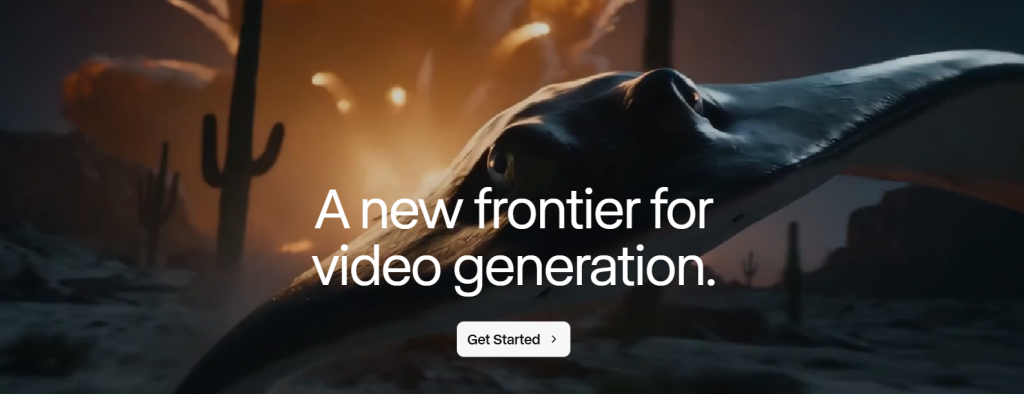
Runway It is one of the most advanced tools for AI video generation and editing.
It can be used to create dynamic content for advertising campaigns, social media, and corporate storytelling.
The video component is becoming increasingly important in digital communication, and Runway allows for experimentation with new formats while maintaining more agile production.
5. Leonardo.ai
Leonardo.ai offers advanced customization options through dedicated templates and settings.
The ability to work with custom styles allows companies to create images that are more consistent with their identity.
This approach is particularly useful when the brand needs frequent visual production while maintaining recognizable characteristics.
How to integrate AI and creativity without losing brand recognition
The use of artificial intelligence in creative production requires precise governance because it introduces a level of speed and variability that, if uncontrolled, tends to dilute brand identity. Technology acts as a generative system that produces variants, interpretations, and potentially very distant visual or textual solutions. In the absence of clear rules, the result is not increased productivity, but a progressive loss of coherence.
For this reason, AI must be integrated within a structured framework, where the brand positioning become the benchmark for every creative decision. Every output, whether it be an image, text, or video content, must be evaluated not only for its aesthetic or communicative quality but for its ability to correctly represent the company's identity.
The fundamental elements are:
- Digital brand guidelines: The guidelines should also include useful instructions for AI tools: visual style, graphic criteria, aesthetic references, and content generation guidelines.
- Validation Processes All content produced with AI must be verified to ensure consistency with values, audience, and positioning.
- Intelligent scalability Generative tools allow for increased production capacity, but value arises from the ability to create large quantities of content while maintaining a consistent identity.
- Specialized consultancy The effective implementation of AI requires cross-functional skills that combine technology, Marketing and communication.
The future of brand positioning: designing an identity legible by humans and AI
In the coming years, the ability to be recognized by generative systems will become an even more central component of the strategy Digital marketing for companies.
The brand positioning will require increasingly precise management of the signals that construct online identity across language, content, data, digital presence, and visual communication. Companies will therefore need to work on overall consistency and precision, creating a presence capable of communicating value to users and providing clear information to artificial systems.
SHM Studio, as an AI Agency, supports businesses in developing AI-based strategies, from consulting to the design of advanced digital processes. Through analysis, technological implementation, and communication optimization, we support our clients in building solid brand positioning in new digital environments.
To be recognizable in generative engines requires a structured strategy: the future of online visibility will depend on the ability to design identities that can communicate with both people and AI.
Contact us for strategic digital consulting and to learn about all our services.
Comparative table of AI software dedicated to visual content creation
| AI Software | Specific Application | Ideal company type |
| Midjourney | Creative image generation, visual concepts, mood boards, advertising campaigns, social media visuals, and communication materials. Thanks to style customization features, it allows for the development of assets consistent with the brand's visual identity. | Companies working on brand identity, creative agencies, fashion brands, design companies, businesses that need high-impact visual campaigns. |
| Adobe Firefly | Creation and editing of images integrated into Adobe workflows, graphic element generation, adaptation of existing content, and optimization of materials for digital communication. | Companies with internal marketing or creative teams, corporate entities, e-commerce businesses, and enterprises that produce large quantities of graphic materials while maintaining professional standards. |
| Canva AI | Rapid content production for social media, presentations, commercial materials, and operational graphics through templates, automations, and brand kit systems. | PMIs, companies with a strong social media presence, marketing teams that need to create frequent content without a complex graphic structure. |
| Runway | AI-powered video content generation and editing, animation creation, advanced editing, and audiovisual storytelling development for digital campaigns. | Companies investing in video marketing, advertising, social media communication, online training, and multimedia content. |
| Leonardo.ai | Creation of custom images through trainable models, development of proprietary styles, and production of visuals consistent with specific creative lines. | Brands needing strong visual customization, companies developing products, creative entities, and businesses that want to maintain a distinctive graphic identity on a large scale. |
FAQ: Deeper Dives into Brand Positioning in the AI Era
1. Why should a brand invest in “semantic authority” instead of focusing solely on traditional SEO?
Traditional SEO focuses on organic ranking based on keywords and links. Semantic authority aims to make the brand a “point of reference” for LLMs (Large Language Models). If AIs don't recognize your brand as an industry entity, they won't cite it in summarized responses, rendering all other visibility efforts ineffective.
2. Is it possible to maintain brand control if I delegate some of the creation to AI tools?
Certainly, provided that the model is implemented Human-in-the-loop. AI handles technical production, while human strategic oversight ensures that each asset complies with Brand Guidelines. AI acts as the operational arm, with the strategy firmly in the hands of professionals.
3. How do I know if my brand is already “invisible” to AIs?
You can conduct “interrogation” tests on the main generative engines. If, when asked to solve problems in which your brand is expert, you are not mentioned or your company is not mentioned among the solutions, it means that your semantic presence is lacking and requires optimization.
4. Is SHM Studio's consultation necessary for managing AI tools, or can I do it myself?
The tools are accessible, but their strategic configuration requires advanced technical expertise. SHM Studio doesn't just use the tools; it builds the infrastructure (prompt engineering, custom models, data architecture) that allows communication to scale, always ensuring consistency with your brand positioning.
Does semantic authority change if my business is B2B versus B2C?
Yes, the focus shifts. In B2B, semantic authority is built on technical guides, white papers, and complex case studies. In B2C, emotional consistency and speed of problem resolution are more important. However, both require impeccable data structure so that AI can associate the brand with the correct value.
Related articles
Discover other articles that explore similar topics in depth, selected to give you a more complete and stimulating view. Each piece of content is carefully chosen to enrich your experience.