
- The game-changing declaration: «Chat is dead»
- From conversation to action: what changes in the architecture
- Immediate impact on SMEs: three concrete scenarios
- The construction site still open: risks and limitations not to be underestimated
- What no one tells you: real change is organizational
- What to do now: strategic orientation for SMEs
- Outlook: 2027 as a year of consolidation
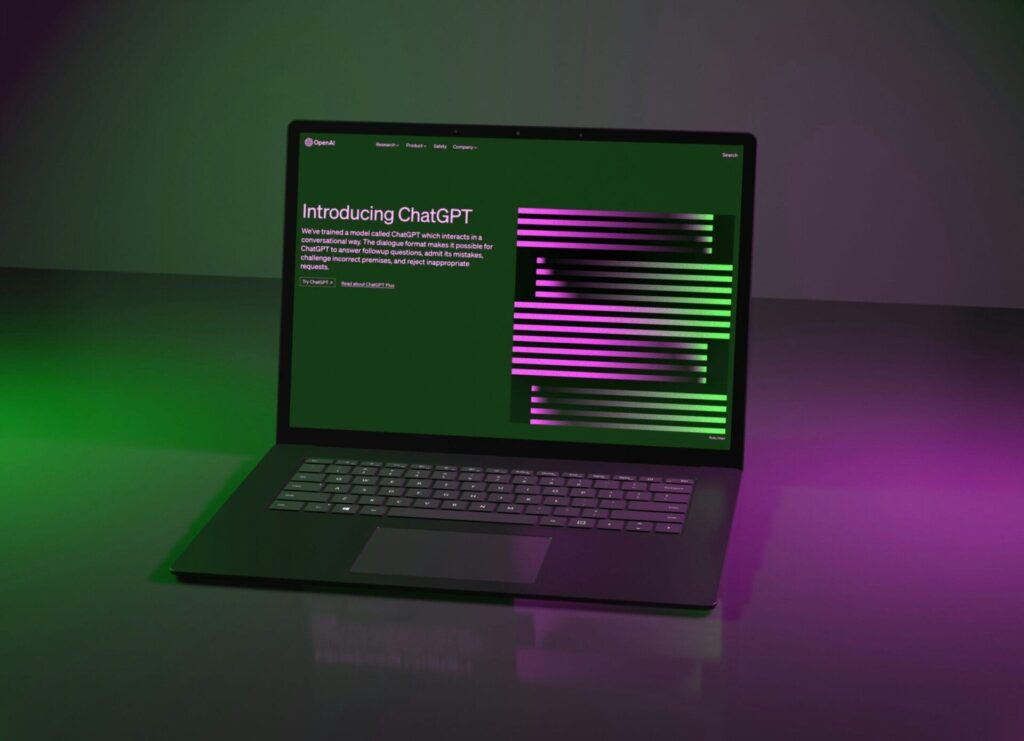
OpenAI has internally stated that «chat is dead.» The company is planning the biggest overhaul of ChatGPT since its inception. The chatbot will transform into a superapp which integrates coding tools, autonomous AI agents, and partner apps like Canva and Booking.com. Therefore, the classic conversational model gives way to systems capable of performing tasks independently.
For Italian SMEs, this change isn't an abstract technical issue. In fact, it means that repetitive business processes—from order management to content creation—could be delegated to unsupervised software agents. Consequently, those who prepare today will have a real competitive advantage in the next 12-18 months.
We of SHM Studio We are carefully monitoring this evolution. In particular, we work with SMEs to identify which processes are already mature for agent-based automation and which still require human oversight. Therefore, this article analyzes what is changing, what concrete impact can be expected, and what strategic moves are worth considering starting now.
The game-changing declaration: «Chat is dead»
In early June 2026, OpenAI circulated an unequivocal internal communication. The phrase circulating among the teams is direct: «Chat is dead». This is not a marketing stunt. It's the operational premise for a deep overhaul of the company's best-known product.
According to reports by The Decoder, OpenAI is planning to turn ChatGPT into a superapp for all intents and purposes. The new product will bundle coding tools, autonomous AI agents, and partner applications like Canva and Booking.com. Therefore, the question-and-answer paradigm is replaced by an ecosystem of continuous automation.
This announcement does not come in isolation. In fact, it fits into a broader trend that sees major tech players — from Google with Gemini to Microsoft with Copilot — converging towards agentic architectures. However, OpenAI is the first to explicitly declare the death of the chat model as the dominant paradigm.
From conversation to action: what changes in architecture
An AI agent is not responding acts. This distinction is technical, but its consequences are very practical. A traditional chatbot waits for an input, processes a response, and stops. An agent, on the other hand, receives a goal and pursues it through a sequence of autonomous actions.
For example, an agent can open a document, extract data from it, compare it with an external database, generate a report, and email it – all without intermediate human intervention. Additionally, it can interact with third-party APIs, execute code, navigate web interfaces, and make micro-decisions along the way.
According to rumors, ChatGPT's new architecture includes precisely this capability. Integrated partner apps – including Canva for visual production and Booking.com for travel management – become nodes in an automation graph. Consequently, users no longer have to manually orchestrate each step between different tools.
To delve deeper into the technical foundations of AI agents, the MIT Technology Review offers an updated overview of the evolution of these systems in the enterprise context.
Immediate impact on SMEs: three concrete scenarios
For Italian B2B and retail SMEs, the shift to the agency superapp opens up operational scenarios that merit attention. This is not futurology. Some of these capabilities are already available in embryonic form and will become mainstream by the end of 2026.
- Customer service automation: An agent can handle first-level requests, consult the CRM, update tickets, and respond via email or chat without supervision. Therefore, the human team focuses on complex cases.
- Coordinated content production Integration with Canva and editorial tools allows for semi-automatic generation of visual and text campaigns. SHM Studio We are already evaluating how these flows integrate with our clients' SEO strategy.
- Operational Management and Reporting Agents connected to ERP and spreadsheets can extract KPIs, generate dashboards, and send periodic briefings to managers. Consequently, the time spent on data collection is drastically reduced.
In all three cases, the assumption is that business processes are sufficiently structured to be delegable. This is often the true bottleneck in Italian SMEs.
The construction site still open: risks and limitations not to be underestimated
It would be incorrect to present this transition as friction-free. Indeed, the agent architecture introduces new complexities that the chat model did not have.
The first risk is the action monitoring. An agent acting autonomously can make mistakes with cascading effects. For example, an incorrect action on a billing system can cause damage that is difficult to trace. Therefore, agent governance—who can do what, with what limitations—becomes a business priority, not just a technical one.
The second risk concerns the dependency on closed ecosystems. If ChatGPT becomes the central automation platform, SMEs risk a significant lock-in. According to an analysis by Gartner, diversifying technology stacks remains a priority for companies that want to maintain strategic flexibility.
Finally, there is the issue of output quality. Current agents are powerful but not infallible. Despite this, many companies tend to overestimate the reliability of these systems in the early stages of adoption. A controlled pilot phase is always advisable before scaling.
What no one tells you: real change is organizational
The public debate focuses on technology. However, the most profound change that the agency superapp introduces is organizational. Companies that effectively adopt AI agents won't be those with the best tools, but those with the clearest processes.
An agent can only automate what is defined. If a process exists only in one person's head, it cannot be automated. Therefore, true preparation for the agency era involves mapping and documenting existing operational flows.
Similarly, internal capabilities must evolve. It's not about training everyone to program agents. It's about developing the ability to design objectives clear and verifiable — what is referred to in the literature as Prompt engineering advanced or, more precisely, Task decomposition.
Italian SMEs that have already started paths of AI adoption With SHM Studio, I'm in a better position. They've already addressed the fundamental questions: what data is available, what processes are repeatable, where human judgment is still needed.
What to do now: strategic orientation for SMEs
OpenAI's roadmap does not have a definitive public release date. However, signs indicate that the first advanced agent features will be available by the end of 2026. Therefore, now is the time to prepare, not when the product is already on the market.
Some concrete actions that SMEs can start immediately:
- Audit of repetitive processes: Identify low-value activities that consume the most time in operational teams. These are prime candidates for agent automation.
- Technology stack evaluation Check which existing tools (CRM, ERP, e-commerce platforms) have open APIs. Agents work best in connected ecosystems.
- Controlled experiment Launch a pilot project on a non-critical process. This allows for gaining experience without high operational risks.
- Internal training: Raise awareness among teams about the difference between rule-based automation and agent-based automation. Realistic expectations reduce post-adoption disappointment.
For SMEs operating in B2B, integration with tools such as LinkedIn Ads e Google Ads will be able to benefit from agents capable of optimizing campaigns more granularly and continuously.
Outlook: 2027 as a year of consolidation
The transition from ChatGPT-chatbot to ChatGPT-superapp won't happen overnight. Therefore, SMEs have a reasonable timeframe to adapt. However, those who start today will have a significant cumulative advantage over those who wait.
Projections for 2027-2028 indicate that AI agents will become standard components of the enterprise operational stack, similar to how CRMs did in the 2000s. According to Harvard Business Review, organizations that integrate AI into their core processes are already seeing productivity gains of more than 20% compared to competitors that do not.
We of SHM Studio We accompany Italian SMEs on this journey. From digital marketing strategy all’AI adoption, to the organic visibility and to web developmentEvery service is being rethought in terms of an increasingly agent-driven ecosystem.
For a direct comparison of your company's specific opportunities, it is possible Contact our team. Or explore the SHM Studio Blog for ongoing insights into AI, automation, and digital strategy.
Related articles
Discover other articles that explore similar topics in depth, selected to give you a more complete and stimulating view. Each piece of content is carefully chosen to enrich your experience.