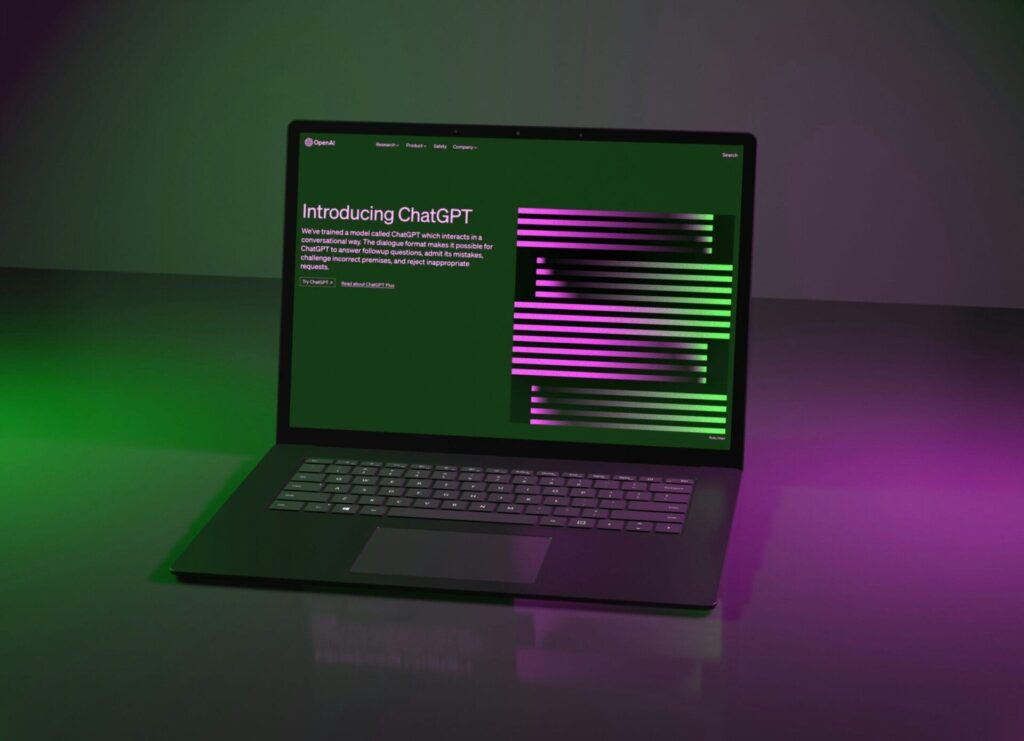

- What has changed with the launch of ChatGPT Work
- The immediate impact on marketing operations
- Content production: from generation to end-to-end production
- What nobody is saying yet: the operational trade-offs
- What to do now: three priorities for marketing managers
- Outlook: where ChatGPT Work stands in 2027-2028
OpenAI announced ChatGPT Work , an autonomous agent capable of operating across multiple applications and files, carrying out a project for hours, and delivering finished outputs starting from a goal. This is not just a simple conversational assistant. It is a system that independently executes sequences of actions using various tools.
Therefore, for marketing managers and digital leaders in Italian SMEs and mid-market companies, the impact is direct. Repetitive marketing ops tasks — reporting, content updates, asset management — become delegable to an agent working in the background. Furthermore, large-scale content production takes on a new operational dimension, with workflows that can be initiated and monitored without constant supervision.
At SHM Studio, we're keeping a close eye on how AI tools are shaking up digital marketing. This OpenAI drop is a total game-changer compared to first-gen AI helpers. So, in the coming weeks, we'll be baking these new insights right into our services for AI consulting and Digital marketing for clients who are already working with us on automation and content production.
What has changed with the launch of ChatGPT Work
On July 9, 2026, OpenAI published the official announcement of ChatGPT Work , describing a tool that goes beyond on-demand text generation. The agent can take concrete actions on apps and files. It can stay active on a project for hours. It can turn a stated goal into a finished deliverable.
However, the novelty is not just technological. It is architectural. ChatGPT Work introduces the concept of persistent agent : a system that maintains a project's context over time, coordinates multiple tools, and operates sequentially without requiring continuous user input. Therefore, the distinction between "assistant" and "autonomous collaborator" becomes operationally relevant.
Plus, multi-app integration means the agent isn't stuck inside just one app. It can jump into files, read data, update documents, and chat with connected apps. For anyone handling crazy digital marketing workflows, this totally flips how we think about handing off tasks.
The immediate impact on marketing operations
The marketing operations are the area where the effect is felt first. Activities like collecting and formatting data from campaigns, producing periodic reports, updating briefs and editorial calendars currently require hours of low-cognitive-intensity manual work. Consequently, they are exactly the type of tasks for which a persistent agent like ChatGPT Work is designed.
For example, a marketing manager can define the objective — «prepare the monthly Google Ads campaign report by integrating Analytics data and the budget sheet» — and let the agent execute the entire sequence. Human oversight shifts from production to review. This doesn't eliminate expertise, but redistributes it towards activities with higher strategic value.
In particular, for Italian SMEs with small marketing teams, the ability to delegate operational sequences to an autonomous agent can make up for a lack of dedicated resources. We at SHM Studio we already see this dynamic in projects of AI consulting that we support: headcount shortage is often the main constraint, not a lack of data or strategy.
Content production: from generation to end-to-end production
The content production is the second front of direct impact. Until now, generative AI tools required an operator to guide every single step: prompting, reviewing, formatting, publishing. ChatGPT Work introduces the ability to define a workflow once and let the agent run it on its own.
So, large-scale content production — SEO articles, ad variations, product card updates, newsletters — can be structured as a delegated process. The agent accesses brief files, generates the content, formats it according to specifications, and deposits it in the indicated destination. The editorial team intervenes in the quality check phase, not production.
Similarly, the flows of SEO copywriting can benefit from this architecture. Keyword research, outline structuring, draft generation, and meta description verification become phases orchestrable by an agent. Furthermore, integration with CMS tools and editorial platforms opens up automation scenarios that until a few months ago required custom development.
According to the analyses of McKinsey on the economic potential of generative AI , marketing and sales functions are among those with the greatest automation potential through generative tools. ChatGPT Work accelerates this trajectory in a concrete way.
What nobody is saying yet: the operational trade-offs
Despite this, there are aspects that deserve a critical reading before integrating such a tool into production workflows. The first concerns the data governance . An agent that accesses company files, apps, and connected systems operates within a broad informational perimeter. OpenAI's security policies and data processing clauses must be carefully reviewed, particularly for companies subject to GDPR.
Plus, output quality depends on the quality of the input goals. An autonomous agent amplifies the instructions it gets, for better or worse. If the brief is fuzzy, the result will be fuzzy at scale. So, critical skill doesn't vanish: it moves upstream, to the goal-setting and acceptance criteria phase.
Lastly, handling screw-ups in a solo workflow is way trickier than a standard chat. If the agent messes up midway through a long chain, the fallout can spread. Because of this, important stuff needs human check-ins, not a blind hands-off approach. This is a big deal that we at SHM Studio we systematically emphasize when working on AI tool adoption with our clients.
Also Harvard Business Review highlighted how the effective adoption of AI tools requires a redesign of processes, not just dropping the tool into existing workflows. ChatGPT Work is no exception.
What to do now: three priorities for marketing managers
The first priority is the mapping of delegable processes . Not all marketing ops tasks are suited for an autonomous agent. First, it is helpful to identify activities that are sequential, repeatable, and based on structured inputs. These are the natural candidates for delegation to agents like ChatGPT Work.
The second priority concerns the integration infrastructure check . ChatGPT Work operates on connected apps and files. Therefore, the quality of integration with tools you already use — CRM, advertising platforms, CMS, spreadsheets — determines the agent's actual usefulness. An audit of available connections is a necessary preliminary step.
The third priority is the advanced prompt engineering training . As mentioned earlier, the quality of the input goals is key. Teams that invest today in crafting precise briefs for autonomous agents get a real operational edge. That's why AI training tracks for marketing teams are becoming a top investment, even for SMEs.
For those managing campaigns on platforms like Google Ads or LinkedIn, the workflows of google ads campaigns and LinkedIn campaigns are among the processes where agentic automation can save the most operational time. Similarly, SEO processes — from keyword research to creating optimized content — benefit from a well-configured agentic setup, as explored in depth in our section SEO services .
Outlook: where ChatGPT Work stands in 2027-2028
The direction is clear. Autonomous agents are becoming the main interface between work teams and digital tools. ChatGPT Work is one of the first products to bring this architecture into a mainstream professional use context. Therefore, this is not an incremental feature: it's a paradigm shift in how digital work is organized.
In the next eighteen to twenty-four months, it's reasonable to expect a proliferation of vertical agents — specialized by function, sector, or platform — and increasing competition between OpenAI, Google, Anthropic, and enterprise players like Microsoft and Salesforce. Among other things, the integration of autonomous agents into CRMs and marketing automation platforms is already underway, with Salesforce Agentforce and Microsoft Copilot moving in the same direction.
For marketing and digital managers of Italian companies, the question isn't whether to adopt agentive tools, but when and how. In short, those who start structuring processes compatible with agentive automation today will be in a better competitive position when these tools reach the operational maturity expected for 2027-2028.
To learn more about how to integrate these technologies into your organization's marketing workflows, you can check out our section services or contact us directly from the page contacts . Further analysis and updates are available in the SHM Studio blog .
Related articles
Discover more articles exploring similar topics, selected to offer you a more complete and stimulating perspective. Each piece of content is carefully chosen to enrich your experience.