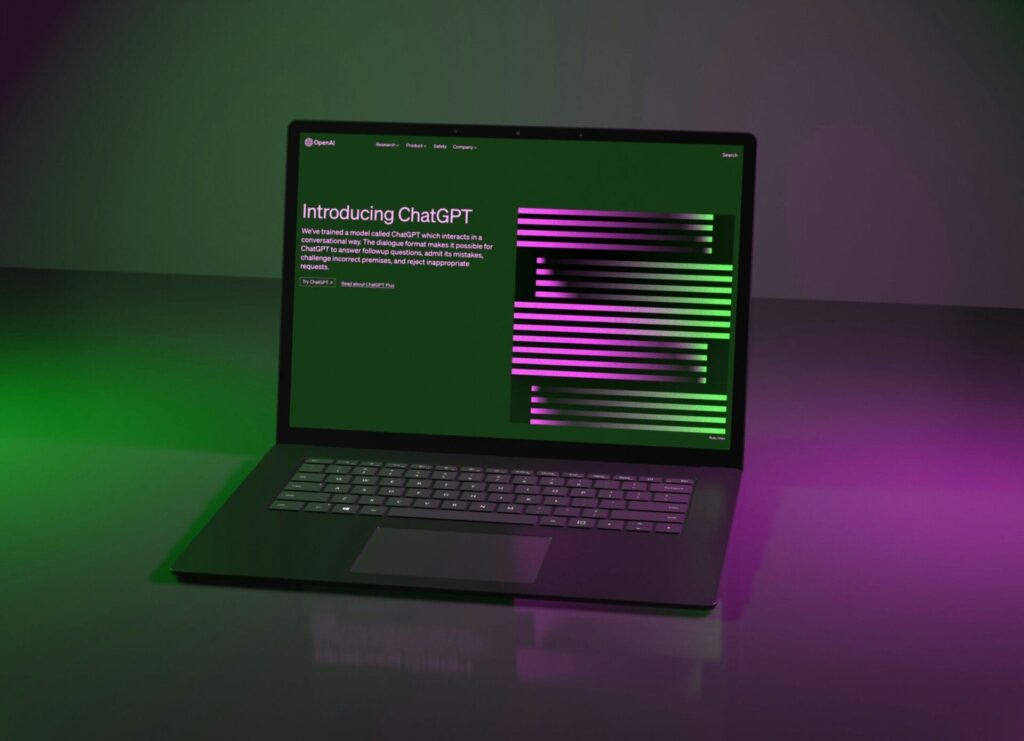

OpenAI has decided to share its new model, GPT 5.6, with only a small group of selected partners. The reason is political: the Trump administration asked for a gradual release for security reasons. As a result, the public launch has been postponed to a date yet to be set.
This slowdown has direct implications for marketing teams that were planning to adopt next-generation AI models. Access to advanced features remains limited to OpenAI's strategic partners. As a result, companies outside that circle need to rethink their short-term AI integration plans.
At SHM Studio, we constantly monitor how language models evolve and how they affect digital strategies in practice. In this article, we look at what has changed, what the immediate consequences are for Italian marketing leaders, and how to find your bearings over the coming weeks.
What changed: the GPT 5.6 slowdown
According to TechCrunch on June 25, 2026, OpenAI has changed its release strategy for GPT 5.6. The model won't be made available to the general public right away. Instead, it will be shared exclusively with a select group of commercial and institutional partners.
The reason is political. The Trump administration has formally asked OpenAI to proceed with caution. The concerns center on the model's safety and the potential risks of a mass release. OpenAI has therefore chosen to comply with the request, at least in the initial phase.
This isn't an isolated episode. The debate on the governance of frontier AI models has been going on internationally for months. However, this is the first time a direct intervention by the US executive has concretely slowed a commercial release of this scale.
The regulatory context nobody wants to name
The GPT 5.6 slowdown fits into a broader picture. Throughout 2025, discussions on the safety of advanced AI models involved governments, research bodies and tech companies. Organizations such as NIST have published risk assessment frameworks for AI systems. Similarly, in Europe the AI Act has introduced specific obligations for high-impact models.
Against this backdrop, the White House's decision isn't entirely surprising. On the contrary, it confirms a trend that's already visible: governments intend to exert growing control over the timing and manner in which the most powerful models are rolled out. OpenAI now has to navigate between commercial pressure and institutional constraints.
According to a recent McKinsey analysis on the future of AI, the governance of frontier models is set to become one of the main competitive factors for tech companies. That means those in a privileged partner position gain a significant, if temporary, advantage.
Immediate impact on marketing and digital teams
For Italian marketing leaders, the consequences are concrete. Anyone who planned to integrate GPT 5.6 into their content pipelines or campaign automations will have to wait. What's more, it's still unclear when the model will be available through OpenAI's standard APIs.
The main areas affected by the delay are the following:
- Advanced content generation: GPT 5.6 promised stronger reasoning and contextual understanding than current models. The delay pushes back access to these improvements for most users.
- Campaign automation: AI integrations in Google Ads and LinkedIn Ads often rely on underlying language models. A delayed update slows down the entire chain.
- AI-assisted SEO and copywriting: Workflows built on OpenAI models for SEO copywriting will stay tied to earlier versions for an indefinite period.
- AI agent development: Multi-agent architectures that leverage GPT 5.6's advanced reasoning capabilities will face development delays.
SMEs and mid-market companies without direct access to OpenAI's partner programs are the hardest hit. They won't be able to access the model during the early access phase reserved for selected partners.
What to do now: move forward without waiting
The delay doesn't necessarily mean a work stoppage. There are concrete steps marketing teams can take in the meantime. First, it helps to map which internal processes truly depend on a model update and which already work well with the versions available.
Second, it's worth exploring the alternative ecosystem. Models like Anthropic's Claude 3.5, Google's Gemini 1.5 Pro and the open-source Llama family offer competitive capabilities for many marketing use cases. A multi-model strategy reduces dependence on a single vendor.
At SHM Studio, we already work with architectures that combine multiple language models depending on the specific task. This approach lets us isolate the impact of any delays or policy changes from a single provider. Operational resilience also comes from diversifying your AI vendors.
Some priority actions to consider:
- Check which business workflows depend directly on OpenAI APIs and evaluate the alternatives already available.
- Monitor OpenAI's official communications about the public release roadmap for GPT 5.6.
- Consider access to OpenAI's partner programs if your usage volume justifies it economically.
- Update your digital marketing plans so they don't depend on features that aren't available yet.
The medium-term outlook: 2027 and beyond
This episode foreshadows a scenario that's likely to repeat. Regulatory pressure on frontier AI models will increase over the next 18-24 months. Companies that build digital strategies solely on the capabilities of the latest models expose themselves to the risk of operational discontinuity.
By contrast, those who take a modular approach, where AI is one tool among others and not the core of the entire architecture, are more resilient. This is especially true for SEO, web development and campaign management, where AI enhances processes that are already structured without fully replacing them.
Looking ahead to 2027, it's reasonable to expect the AI market to become layered. On one side, an enterprise tier with early access to advanced models through direct agreements. On the other, a mainstream tier with delayed but stable access. As a result, companies will need to decide which tier to position themselves in, based on their usage profile and available resources.
If you're a marketing leader who wants to dig deeper into these dynamics, the SHM Studio team is available for a strategic consultation. You can get in touch from the contact page or explore more insights on the agency blog.
Related articles
Discover more articles exploring similar topics, selected to offer you a more complete and stimulating perspective. Each piece of content is carefully chosen to enrich your experience.