
- What has changed with the GPT-5.6 Sol update
- The logic of stratification: why OpenAI separates layers
- Direct impact on marketing automation workflows
- The construction site is still open: what we don't know yet
- What to do now: guidance for marketing managers
- Outlook: where the OpenAI model family is heading
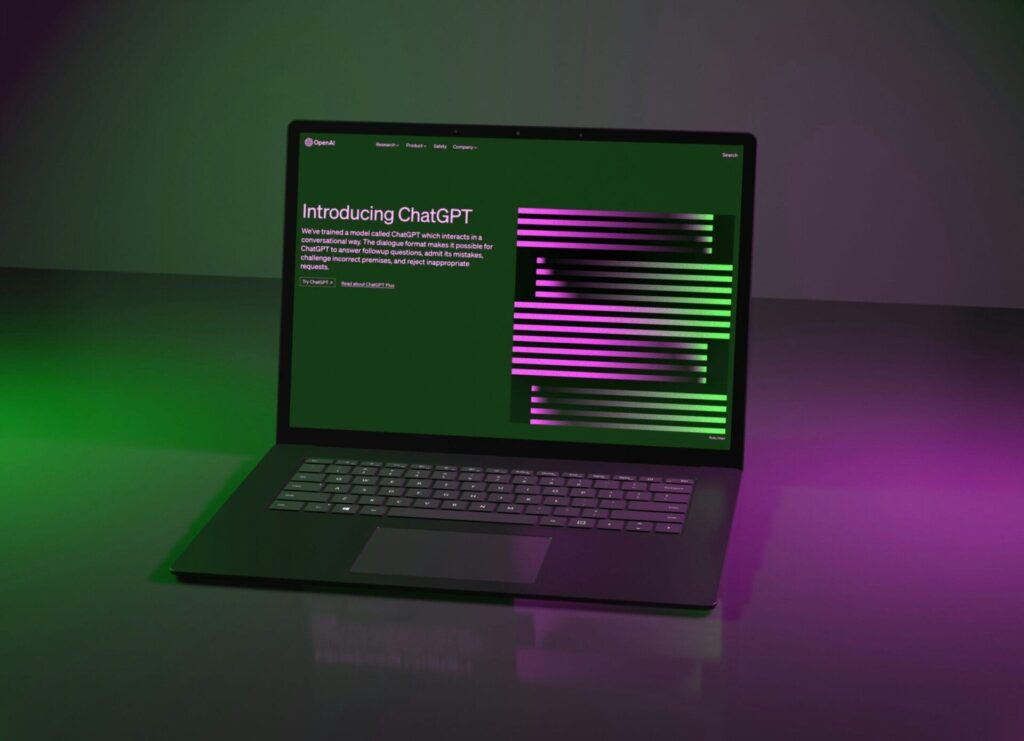
OpenAI has released a significant update for GPT-5.6 Sol, the intermediate model available on ChatGPT. The main new features are two: more focused responses and a reasoning slider which allows adjusting the model's reasoning depth. Additionally, free users will be migrated to GPT-5.6 Luna — the lighter model in the family — with unlimited text chats and a button to activate extended reasoning.
However, Luna remains significantly inferior to Sol in terms of capabilities. Therefore, the stratification between free and paid models becomes more pronounced. For marketing managers using ChatGPT in content generation or marketing automation workflows, this distinction is not irrelevant: the quality of the output directly depends on the access tier. Consequently, companies relying on the free plan for operational activities risk working with an undersized model compared to their needs.
At SHM Studio, we constantly monitor the evolution of the OpenAI ecosystem to guide our clients' technological choices. Therefore, in this article, we analyze what concretely changes, what impact these updates have on Italian marketing teams, and what is advisable to do now to avoid losing competitive advantage.
What has changed with the GPT-5.6 Sol update
OpenAI has announced a significant update for GPT-5.6 Sol, the model positioned in the mid-range of ChatGPT's offering. The changes concern two distinct areas. First of all, responses become more focused: the model reduces its tendency to digress and produces more synthetic and contextually relevant output. Secondly, a reasoning slider , a tool that allows the user to calibrate the depth of reasoning applied to each request.
In parallel, OpenAI has redefined access for free users. Starting the week after the announcement, the free plan will guarantee unlimited text chats, but exclusively on GPT-5.6 Luna , the lighter model in the family. Additionally, Luna will receive a dedicated button to activate longer reasoning on complex requests. However, Luna's capabilities remain substantially inferior to Sol's.
The original source of this news is The Decoder , which documented the technical details of the update. Therefore, this is a move that combines premium product improvement and restriction of the free offering.
The logic of stratification: why OpenAI separates layers
OpenAI's strategy is not random. In fact, differentiating between models serves to build a hierarchy of perceived value that justifies conversion to the paid plan. Sol becomes more capable and controllable. Luna, on the other hand, remains accessible but limited. This scheme recalls the classic freemium logic applied to SaaS products.
According to analysis by Gartner , the stratification of AI models by access level is set to become the industry standard by 2027. Therefore, this is not an isolated choice by OpenAI, but a structural trend. Consequently, companies that build workflows on free models today may find themselves having to renegotiate their technological dependencies in the short term.
In particular, the reasoning slider introduced on Sol represents an interesting qualitative leap. It allows optimizing the trade-off between processing speed and depth. For content generation tasks requiring argumentative coherence — such as white papers, market analyses, or B2B copy — this feature opens up new operational scenarios.
Direct impact on marketing automation workflows
For marketing teams integrating ChatGPT into their processes, the update has concrete implications. First and foremost, those using Sol via API or the Plus/Pro plan now have granular control over the model's behavior. This is relevant for the Marketing automation : being able to adjust the reasoning level allows balancing computational costs and output quality based on the type of task.
For example, for generating meta descriptions or email subjects, superficial reasoning is sufficient and faster. Conversely, for producing strategic content — competitive analysis, creative briefs, campaign scripts — deeper reasoning significantly improves quality. Therefore, the slider is not just an aesthetic feature: it's an operational optimization tool.
However, those on the free plan will have to deal with Luna. Despite this, the extended reasoning button on Luna might partially bridge the gap for specific tasks. It remains to be empirically evaluated how effective this compensation is in contexts of SEO copywriting and content production.
The construction site is still open: what we don't know yet
Despite the announcement, several aspects remain unclear. The comparative benchmark between updated Sol and Luna with extended reasoning on real marketing tasks is not yet defined. Furthermore, OpenAI has not communicated whether the reasoning slider will also be available via API or will remain confined to the ChatGPT interface. This detail is crucial for those integrating the models into complex technological stacks.
Also, it is unclear whether the migration of free users to Luna will be automatic or require explicit action. Finally, Luna's update roadmap has not been communicated. Therefore, companies that today rely on the free plan for operational activities find themselves in a position of uncertainty that requires rapid evaluation.
Recent research by Harvard Business Review highlight that relying on single AI providers without a fallback strategy represents a growing operational risk for organizations. Therefore, diversifying AI tools is no longer an option, but a strategic necessity.
What to do now: guidance for marketing managers
At this stage, there are three operational priorities. First and foremost, it's important to check which plan your current business workflows are based on and which model is actually being used. Many teams assume they are working with the most advanced model available, but this isn't always the case.
Next, it's advisable to test Sol's reasoning slider on a sample of tasks representative of your process. content generation with AI . This allows you to identify the optimal configuration before scaling it up. We at SHM Studio are already conducting comparative tests on tasks of SEO and copywriting to evaluate the qualitative delta between different slider settings.
Finally, for companies on the free plan with significant volumes, it's time to consider an upgrade. The cost of the Plus or Pro plan should be weighed against the opportunity cost of working with an undersized model. Therefore, a quick cost-benefit analysis is advisable before automatically migrating to Luna.
For those who manage google ads campaigns or LinkedIn campaigns with AI support for copy generation, the model's quality directly impacts ad performance. Therefore, this is not a purely technical decision, but it affects the ROI of media activities.
Outlook: where the OpenAI model family is heading
Looking ahead to 2027, OpenAI's trajectory seems geared towards a controlled proliferation of specialized models. Sol and Luna are likely the first elements of a larger family, with variants optimized for specific verticals — coding, data analysis, content creation. Furthermore, the reasoning slider anticipates an approach where the user doesn't choose the model but dynamically configures its behavior.
This paradigm shift is relevant for those who design digital architectures that integrate AI. In fact, the logic will no longer be
Related articles
Discover more articles exploring similar topics, selected to offer you a more complete and stimulating perspective. Each piece of content is carefully chosen to enrich your experience.