
- The timeline: two filings in ten days
- The financial backdrop: sky-high valuations and pressure for returns
- Winners and losers: who gains from the race to go public
- The potential winners
- The potential losers
- SHM Studio's take: why this matters for Italian SMEs
- Still under construction: regulatory uncertainty and governance
- Next moves: what to evaluate over the next 12-18 months
- Diversify your AI portfolio
- Review your API contracts
- Invest in in-house skills
- Keep an eye on product roadmaps
- What nobody is saying: the IPO as an accelerator of commoditization
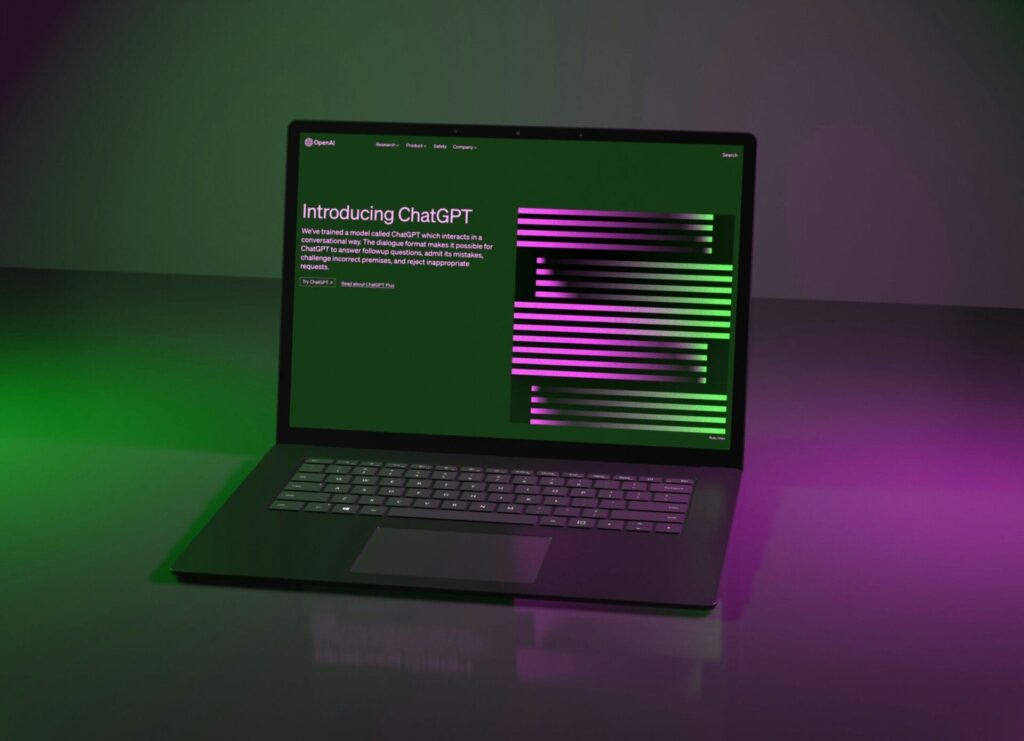
OpenAI has confidentially filed the paperwork for a stock market listing (IPO). The move comes just over a week after Anthropic's similar filing. The race to go public between the two leading players in generative AI is now officially on.
This marks a coming of age for the AI industry. When the key players in a market seek public capital, competition heats up. As a result, service pricing, product roadmaps and API access policies could change significantly in the short to medium term. Italian SMEs that already use tools built on these models need to watch developments closely.
At SHM Studio, we follow these developments to give our clients an up-to-date strategic view. In this analysis, we walk through the timeline of events, identify winners and losers, and suggest the most relevant next steps for the Italian B2B and retail context. Finally, we share our perspective on how to position yourself over the next 12-18 months.
The timeline: two filings in ten days
On June 8, 2026, OpenAI confidentially filed its documentation for an initial public offering. The news was reported by TechCrunch, which noted that the filing came just over a week after Anthropic's. Both leading competitors in advanced language models are now racing toward the public markets.
The confidential submission — the so-called confidential filing — is a tool provided for under US SEC rules. It allows companies to start the listing process without immediately making their financial details public. The full documentation is then made available before the roadshow. As a result, OpenAI’s financial data is not yet available to the market.
Still, the strategic signal is already crystal clear. Both companies chose a very tight time window. That is no coincidence: the competition for institutional investors' confidence is just as fierce as the technology race.
The financial backdrop: sky-high valuations and pressure for returns
In recent private transactions, OpenAI was valued at around $300 billion. Anthropic, for its part, has reached valuations in the range of $60-75 billion. The two IPOs could therefore be among the biggest public offerings of the decade in tech.
According to analysis by McKinsey & Company, the global generative AI market could add between $2.6 and $4.4 trillion a year to the global economy. Those numbers partly justify the high valuations. However, public investors will apply a different kind of pressure than venture capital investors: listed markets demand profitability, not just growth.
In fact, OpenAI has posted significant operating losses in recent years, driven by huge training and infrastructure costs. As a result, the path to profitability becomes a central theme in the story the company will have to build for the public markets.
Winners and losers: who gains from the race to go public
The listings of OpenAI and Anthropic will ripple across the entire ecosystem. Here are the main players.
The potential winners
- Early-stage investors: funds such as Sequoia Capital and other venture capitalists will finally be able to cash out positions built up over the years. The expected liquidity is considerable.
- Microsoft: its strategic partnership with OpenAI gets even stronger. A listed OpenAI is a more transparent, stable partner for the Azure and Copilot ecosystem.
- Developers and API partners: going public brings greater accountability. Product roadmaps will become more predictable and easier to communicate to business stakeholders.
- SMEs adopting AI: competition between OpenAI and Anthropic, both under pressure to grow revenue, could translate into more competitive pricing on enterprise plans.
The potential losers
- Mid-size players: companies like Cohere, Mistral or AI21 Labs could see investor attention squeezed as money flows to the bigger IPOs.
- Vertical AI startups: the cost of capital could rise for those without the scale of OpenAI or Anthropic. Investors will tend to consolidate their positions in the market leaders.
- Google and Meta: the listing of direct competitors raises the pressure on these giants' AI divisions, which will have to speed up the monetization of their own models.
SHM Studio's take: why this matters for Italian SMEs
At SHM Studio, we work every day with B2B and retail SMEs that are integrating AI tools into their processes. So we look at these developments from an operational angle, not just a financial one.
OpenAI's listing introduces three key dynamics for mid-sized Italian companies.
First, contractual stability. A listed company faces stricter disclosure and governance obligations. As a result, unilateral changes to API terms of service become harder to push through without reputational consequences in the public markets. For SMEs that have built workflows on GPT-4 or later models, this is a positive sign.
Second, pressure to monetize. Public markets will demand revenue growth. It is reasonable to expect new enterprise pricing tiers, premium features and possible increases on current plans. SMEs need to look carefully at the total cost of ownership of the AI solutions they adopt.
Finally, a faster innovation cycle. Competition between OpenAI and Anthropic, both under public scrutiny, will drive more frequent releases and more transparent communication about model capabilities. That benefits those who adopt AI in a structured way.
Still under construction: regulatory uncertainty and governance
OpenAI's listing is not free of structural complexity. The company has begun transforming its corporate structure, moving from a capped-profit setup to a more traditional for-profit model. The process is still under way and could affect the roadshow timeline.
According to an analysis by Harvard Business Review, the governance of AI companies is one of the thorniest issues for institutional investors. Even so, market interest remains extremely high. Governance risks don't seem to be a decisive brake on the listing.
The European regulatory front is just as relevant. The EU's AI Act entered its operational phase in 2025. As a result, listed companies operating in the European market will have to report regulatory compliance to their shareholders. This could speed up compliance investments by OpenAI and Anthropic, with positive effects for European SMEs that use their services.
Next moves: what to evaluate over the next 12-18 months
For Italian SMEs that already use AI tools or are considering them, the period before and after the IPOs calls for some strategic thinking.
Diversify your AI portfolio
Relying on a single language model provider exposes your business to pricing and service continuity risks. It makes sense to consider a multi-model approach that combines solutions from OpenAI, Anthropic and open-source players like Mistral. Our AI consulting services include precisely the assessment of these scenarios.
Review your API contracts
Before the IPOs are completed, it's a good idea to review the contract terms of the API licenses you use. In particular, check the unilateral change clauses and the notification mechanisms for price changes. Our digital marketing team supports companies in optimizing their technology costs.
Invest in in-house skills
Relying on a single vendor also shrinks when you build in-house skills. So training people who can evaluate, integrate and monitor different AI models becomes a strategic asset. This is especially true if you run copywriting, Google Ads campaigns and LinkedIn campaigns with AI support.
Keep an eye on product roadmaps
Public companies publish quarterly guidance. As a result, the roadmaps of OpenAI and Anthropic will become clearer and more predictable after their IPOs. That makes 12-24 month technology planning easier for SMEs. Our web development and SEO services already factor in these changes when we design digital architectures.
What nobody is saying: the IPO as an accelerator of commoditization
There's one aspect that rarely comes up in the mainstream debate on AI IPOs. Going public tends to push companies toward standardized, scalable products. So in the medium term, the language models from OpenAI and Anthropic could look more and more like infrastructure commodities, much like what happened with the AWS, Azure and Google Cloud services.
This scenario has specific implications for SMEs. If base models become commodities, value shifts to those who know how to integrate them best into their own processes. As a result, competitive differentiation won't come from access to the model, but from the quality of the integration, the quality of your proprietary data and your ability to build AI workflows tailored to your industry.
To dig deeper into this topic, MIT Technology Review has published in-depth analyses of the commoditization path of generative AI. It's recommended reading for anyone planning technology investments for 2027-2028.
For Italian SMEs, the time is right to build proprietary skills and processes before the market consolidates further. The SHM Studio blog will keep tracking these developments. For tailored advice, you can reach us through our contact page.
Related articles
Discover more articles exploring similar topics, selected to offer you a more complete and stimulating perspective. Each piece of content is carefully chosen to enrich your experience.