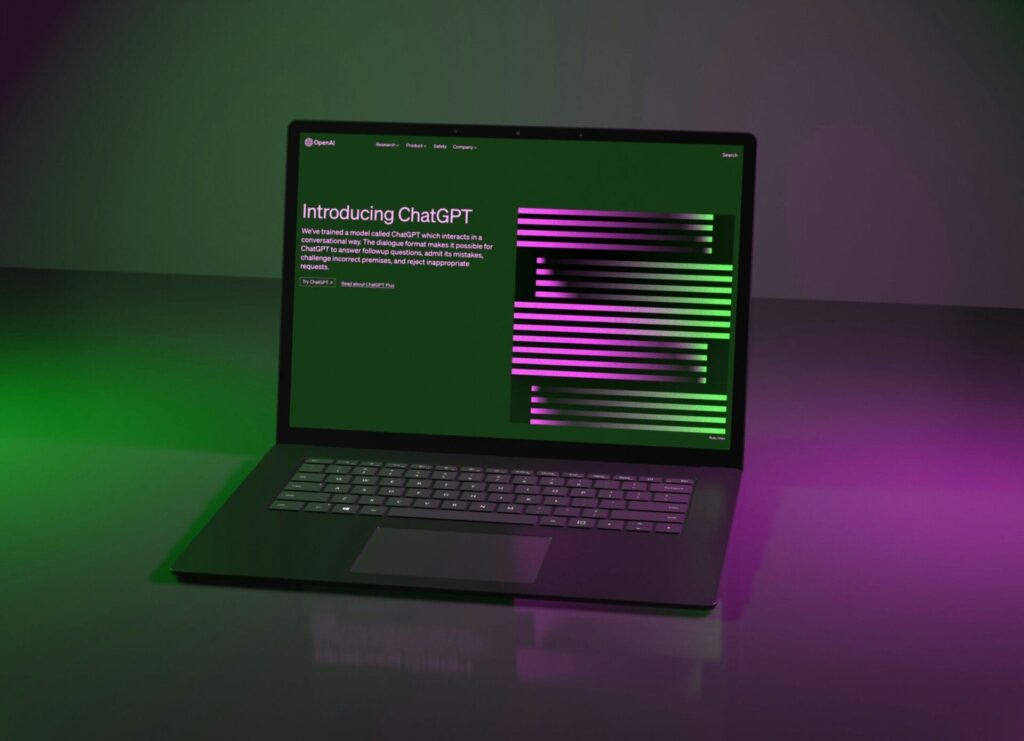

- Is it really worth activating ChatGPT for Sales in my company?
- What did OpenAI launch, and how does it work in practice?
- How much time do salespeople really save?
- Is the Italian market ready? How many companies already have a CRM?
- Three Real-World Scenarios: What Changes for Different Italian Companies?
- Which tools integrate with ChatGPT for Sales?
- What risks and limits should you know before getting started?
- Why is this being discussed now: is the AI market in Italy accelerating?
- How to get started with ChatGPT for Sales: the concrete steps
- What mistakes are most common when adopting an AI plugin for sales?
- How do I know if the plugin is really helping my team?
- So, is the ChatGPT for Sales plugin worth it for your company?
- How we see it at SHM
- Frequently Asked Questions
- OpenAI has launched ChatGPT for Sales, a plugin that researches prospects, prepares pitches and updates the CRM straight from the chat, with more than 30 partner integrations.
- According to Salesforce data cited by vocap.io, salespeople spend only 28% of their time actually selling: AI automation aims to flip that ratio.
- In Italy only 21.73% of companies with 10+ employees use a CRM (Eurostat 2025): if you haven't structured your sales data yet, start there before activating the plugin.
- The real advantage comes when the CRM is already populated and sales processes are defined: without that foundation, AI amplifies the mess instead of reducing it.
Italian sales reps spend only 28% of their time actually selling. The other 72% disappears into emails, CRM updates and meeting prep. ChatGPT for Sales was designed to win those hours back.
Is it really worth activating ChatGPT for Sales in my company?
It depends on one clear condition: if your sales team already has an active CRM and structured sales data, the plugin can cut manual work significantly. If your CRM is empty or messy, AI won't fix the underlying problem.
ChatGPT for Sales is a plugin (an extension that connects to external tools) launched by OpenAI to automate the most repetitive tasks in the sales cycle: researching potential customers, preparing presentations, updating records in the CRM (the software that collects all your customer and deal data) and moving sales opportunities forward.
The right question isn't "is it useful?" but "am I ready to use it?" The table below helps you understand where you stand.
| Your situation | Is it worth activating? | why |
|---|---|---|
| Active CRM, up-to-date data, a team that uses it every day | Yes | The plugin immediately finds data to work with and cuts manual time |
| CRM installed but barely used, incomplete data | Halfway | Clean up the CRM first, then activate the plugin |
| No CRM, sales managed via email or Excel spreadsheet | No, for now | You need a basic tool first: AI doesn't replace structure |
| Small team (1-3 salespeople) with few prospects per month | Halfway | The time savings are real, but the investment should be weighed against your volumes |
What did OpenAI launch, and how does it work in practice?
OpenAI has introduced the Sales plugin for ChatGPT, backed by more than 30 integrations with partner tools, to cover the entire sales cycle from prospect research to closing the deal.
The plugin connects to the main CRMs and sales tools your team already uses. From the same chat window, a sales rep can ask ChatGPT to research a target company, build a personalized proposal, update the status of a deal in the CRM and plan the next step.
Salesforce has already brought its Agentforce Sales app into ChatGPT as an open beta, as announced by Salesforce in December 2025: sales reps can query the CRM, update opportunities and assign leads without leaving the chat.
| Activity | Before (manual) | With ChatGPT for Sales |
|---|---|---|
| Prospect research | 30-60 min per target company | Summary in a few minutes from the chat |
| Pitch preparation | 1-2 hours of research + writing | Personalized draft in minutes, to be reviewed |
| CRM updates | 5-10 min per deal | Update via chat command |
| Lead prioritization | Manual pipeline analysis | Automatic suggestions based on CRM data |
| Personalized outreach | Writing emails one by one | Personalized templates at scale |

How much time do salespeople really save?
The available data points to significant reductions in manual work, but the result depends on how structured your CRM already is and how your team adopts the tool.
The starting point is uncomfortable: according to Salesforce data reported by vocap.io, sales reps spend only 28% of their time on real selling. The remaining 72% goes to administrative tasks: updating the CRM, preparing meetings, writing reports and handling internal emails.
NeoBid, a company that integrated HubSpot with ChatGPT for Sales, estimated a reduction in manual work of about 65% across prospect research, CRM enrichment, opportunity prioritization and personalized outreach, as reported by Unite.AI.
Is the Italian market ready? How many companies already have a CRM?
Italy is below the European average in CRM adoption, and the gap between large companies and SMEs is huge. If you haven't structured your sales data yet, start there before thinking about AI.
According to Eurostat data on digital integration in businesses, in 2025 only 21.73% of Italian companies with at least 10 employees used a CRM. The European average is 28.51%, and countries like Finland reach 55.79%. As workspace369.com explains in more detail, the gap is structural and mainly affects SMEs.
The gap by company size is even sharper: in the EU, 65.43% of large companies (250+ employees) use a CRM, versus only 24.69% of small ones (10-49 employees). That's a 41-percentage-point gap, up from 38 in 2023.
Three Real-World Scenarios: What Changes for Different Italian Companies?
The plugin's benefit varies widely depending on industry, deal volume and the digital maturity of your sales team.
Here are three illustrative scenarios to see where the plugin adds the most value. The numbers are estimates built to show the reasoning, not real client data.
| Company type | Current situation | What changes with the plugin | Estimated weekly savings |
|---|---|---|---|
| B2B manufacturing company, 5 salespeople, HubSpot active | Each salesperson manually updates 15-20 records per week | CRM updates via chat, automatic call summaries | ~4 hours/salesperson |
| Professional firm, 2 salespeople, CRM in Excel | No data structure, prospects managed via email | Implement a CRM first, then the plugin | 0 (missing prerequisite) |
| B2B e-commerce, 10 salespeople, Salesforce in use | Manual prospect research, generic standard pitches | Automated research, personalized pitches at scale | ~6 hours/salesperson |

Which tools integrate with ChatGPT for Sales?
At launch, more than 30 integrations are available with the main CRMs and sales tools. The right choice depends on what your team already uses.
The plugin doesn't replace your CRM: it builds on what you already have. The best-documented integration at launch is with Salesforce through Agentforce Sales, but the ecosystem also includes HubSpot and other sales intelligence and outreach tools. It's worth comparing the options based on the CRM you already use before considering any change.
If you're exploring the ecosystem of ChatGPT plugins for work, you'll find a broader picture in our article on advanced ChatGPT plugins and automations, which describes how these tools are becoming true operational interfaces.
| CRM / Tool | Integration type | What you can do from the chat |
|---|---|---|
| Salesforce (Agentforce Sales) | Native app in open beta | CRM queries, opportunity updates, lead assignment |
| HubSpot | Partner plugin | Record enrichment, prioritization, outreach |
| 30+ other partners | Partner plugin | Varies by tool: research, notes, scheduling |
What risks and limits should you know before getting started?
There are three main risks: poor-quality CRM data, team resistance to adoption and privacy issues around customer data.
The plugin works on the data it finds in your CRM. If records are incomplete, duplicated or poorly updated, the AI produces equally unreliable output. It's the classic "garbage in, garbage out" problem.
On the privacy front, customer data passing through the plugin must comply with the GDPR (the European regulation on personal data protection). Before activating any integration, check where the data is processed and whether your contract with OpenAI and its partners includes the clauses needed to process business data.
The topic of AI agent adoption in companies is analyzed in detail in our article on Agentic AI in business, which shows how internal resistance is often the main obstacle, not the technology.
| Risk | Impact | How to manage it |
|---|---|---|
| Incomplete or dirty CRM data | Unreliable AI outputs | CRM audit and cleanup before activation |
| Resistance from the sales team | Low adoption, wasted investment | Hands-on training and involvement during the pilot phase |
| Privacy and GDPR | Fines, loss of customer trust | Review DPA contracts with OpenAI and partners |
| Dependence on a single vendor | Technology lock-in | Evaluate alternatives and keep your data exportable |
Why is this being discussed now: is the AI market in Italy accelerating?
Yes. The AI market in Italy reached €1.8 billion in 2025, growing 50% over the previous year, but adoption among SMEs is still very low.
According to the Artificial Intelligence Observatory of the Politecnico di Milano, reported by Automazione Plus, the Italian AI market reached €1.8 billion in 2025, after €1.2 billion in 2024 and €760 million in 2023. Growth is steady and accelerating.
But there's a sharp gap between large and small companies. 71% of large Italian companies launched at least one AI project in 2025 (up from 59% in 2024). Among SMEs, the share drops to 8%. Tools like ChatGPT for Sales, which integrate with existing CRMs without requiring custom development, are designed precisely to lower this barrier.
How to get started with ChatGPT for Sales: the concrete steps
The path has six phases, from checking your CRM to activating the plugin. Skipping the first steps is the most common mistake.
- 1 · Sales manager + ITCRM auditCheck that the CRM is active, up to date and used by the team. If the data is dirty, start here.
- 2 · IT manager or consultantGDPR and contract reviewReview the terms of OpenAI and its partners for the processing of company and customer data.
- 3 · Sales managerChoose the right integrationIdentify which partner plugin connects to your CRM (Salesforce, HubSpot or other).
- 4 · Sales team (2-3 people)Pilot on one segmentActivate the plugin for a small group of salespeople and one prospect segment for 4-6 weeks.
- 5 · Sales managerMeasure the resultsCompare the time spent on administrative tasks before and after. Use the data to decide whether to scale.
- 6 · The whole sales teamRollout and trainingExtend to the whole team with hands-on sessions. Adoption is built through use, not manuals.
If you want to understand how to structure the automation of repetitive processes more broadly, read our article on Claude Skills and the automation of repetitive workflows, which tackles the same problem from a complementary angle. If you manage a sales team in a B2B context, the guide on ChatGPT Work for sales teams is also useful.
What mistakes are most common when adopting an AI plugin for sales?
The most common mistake is activating the plugin before your data is in order. The second is not involving your sales reps in the testing phase.
| Error | Why it happens | How to avoid it |
|---|---|---|
| Activating the plugin with a messy CRM | People assume AI will fix the data on its own | Data cleanup first, then the plugin |
| Starting with the whole team at once | You want to speed up adoption | Pilot with 2-3 people, then scale |
| Not measuring the time saved | No starting baseline | Record current time spent before activating |
| Ignoring hands-on training | People assume the interface is intuitive | Hands-on sessions with the team's real cases |
| Neglecting the GDPR review | It's treated as a technical detail | Involve your DPO or a legal consultant first |
How do I know if the plugin is really helping my team?
Three indicators are enough to tell whether adoption is working: time spent on administrative tasks, CRM update rate and number of prospects worked per sales rep.
| Indicator | How to measure it | Positive signal |
|---|---|---|
| Time spent on administrative tasks | Weekly time tracking per salesperson | 20%+ reduction in the first 4 weeks |
| CRM update rate | % of records updated within 24h of the call | Increase over the pre-plugin baseline |
| Prospects worked per salesperson | No. of companies contacted per week | Increase without more hours worked |
| Pitch quality | Subjective customer feedback + email response rate | Improved outreach response rate |
| Plugin adoption | % of salespeople who use it at least 3 times a week | Above 70% after the first month |
So, is the ChatGPT for Sales plugin worth it for your company?
It's worth it if you have an active CRM with up-to-date data, a team of at least 3-4 sales reps and a prospect volume that makes manual management burdensome. The time savings are real and measurable.
Somewhere in between: you have a CRM, but it's used inconsistently. Consolidate internal adoption first, then activate the plugin: otherwise you'll end up automating processes that are still messy.
Not yet if you don't have a structured CRM yet or your sales team is just 1-2 people with few prospects per month. Start with the foundations: a basic tool, clean data, defined processes.
How we see it at SHM
For us, tools like ChatGPT for Sales confirm a direction we've been following for a long time: AI should free people from routine, not replace their judgment. A sales rep who stops updating the CRM by hand doesn't get worse at selling: they get freer to do it.
The critical point, though, is always the same: AI amplifies what it finds. If your data is in order, it amplifies efficiency. If it's messy, it amplifies chaos. That's why our approach always starts with an assessment of your existing processes and data, before touching any tool.
We've worked on similar integrations, such as automatic synchronization of catalogs and management systems and AI assistants trained on real data, and the lesson is always the same: technology works when the problem has already been well understood. Business process automation with AI is at the heart of our daily work, which you can explore in our hub dedicated to AI and process automation.
If you want to figure out where to start for your company, you can explore our services for strategic AI integration, data processing and business intelligence and training on business process automation.
Frequently Asked Questions
More than 30 partner integrations are available at launch, including Salesforce and HubSpot. Not every CRM is supported: before you turn on the plugin, check whether your tool is on the list of available integrations on OpenAI's website. If you use a less common or custom-built CRM, you may need a custom integration.
OpenAI didn't announce separate pricing for the Sales plugin at launch: access is tied to existing ChatGPT plans, with possible extra costs for partner integrations. Check the latest details directly on openai.com, because prices can change fast.
It's a legitimate question, and you should ask it before activating any integration. OpenAI offers privacy options for company data in its business plans, but you need to review the data processing agreements (DPA) and make sure they comply with the GDPR. Involve your data protection officer or a legal consultant before moving forward.
For standard integrations with popular CRMs like HubSpot or Salesforce, setup is fairly simple and requires no custom development. If your CRM is customized or your data is spread across several systems, you may need technical support to set up the connection correctly.
The plugin works with the data it finds: if records are incomplete or outdated, the AI's suggestions will be unreliable. Before you turn on ChatGPT for Sales, it's essential to audit your CRM and set clear rules for keeping it up to date. AI doesn't fix a problem of operational discipline: it amplifies it.
It depends on your deal volume. With 1-2 salespeople and few prospects a month, the time saved may not justify the cost and setup time. With 3-5 salespeople and an active pipeline, the savings become significant within the first few weeks. The key is to have a working CRM as your starting point.
The real competitive advantage isn't having the plugin: it's having your data in order when the plugin arrives.
Related articles
Discover more articles exploring similar topics, selected to offer you a more complete and stimulating perspective. Each piece of content is carefully chosen to enrich your experience.