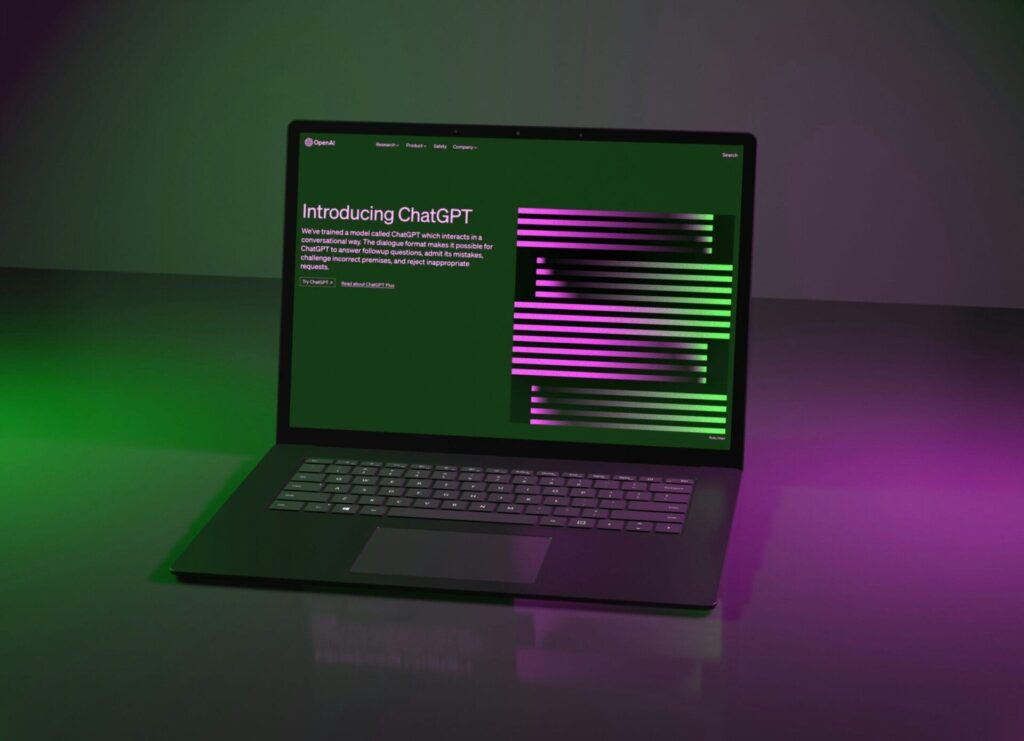

Circles, a digital telco operator, has integrated OpenAI and Codex APIs into its product infrastructure. The published results are significant: +22% ARPU (Average Revenue Per User) and -9% churn . Plus, internal dev efficiency got a measurable boost. This is one of the first public case studies where generative AI is systematically applied to retention and personalization in the telco sector.
However, the value of this case goes beyond the telecommunications sector. Therefore, marketing managers of Italian SMEs and mid-market companies — both B2B and retail — can draw concrete operational insights. In particular, the AI-driven personalization logic applied by Circles is transferable to any context where behavioral segmentation and one-to-one communication are strategic levers. We at SHM Studio we analyze the history, mechanisms, and practical implications for the Italian market.
Finally, this case raises a relevant question for those managing digital marketing budgets: is AI applied to retention still a competitive advantage, or is it becoming a minimum requirement? The answer, as we will see, depends a lot on the speed of adoption.
Circles: timeline of an AI-native integration
Circles is a digital telco operator founded in 2014, with a presence in Asia, the Middle East, and Europe. Its business model relies on an approach asset-light : no proprietary network infrastructure, just a software layer orchestrating the customer experience. This setup made the AI integration way faster compared to legacy carriers.
During 2025, Circles started a structured partnership with OpenAI. The goal was twofold. On one hand, to personalize communications and offers in real time. On the other hand, to speed up internal development through Codex, OpenAI's code generation model. The results were published directly on the official OpenAI website .
Therefore, we are looking at a documented and verifiable case. These aren't projections or internal estimates. These are KPIs measured on a real operational basis.
The numbers that define the case: ARPU, churn, and development speed
Three metrics emerge clearly from the case study. First of all, the ARPU has grown by 22% . This metric shows that existing customers are spending more, likely thanks to tailored offers and contextual upselling. In a low-differentiation industry like telco, a bump like this is considered huge.
Afterwards, the churn decreased by 9% . Historically, retention is the most expensive problem for telecom operators. Acquiring a new customer costs on average five to seven times more than keeping an existing one, according to consolidated research from Bain & Company . A 9% reduction therefore has a direct and measurable economic impact on operating margin.
Finally, the development efficiency has improved thanks to the use of Codex. Tech teams cut down deployment times for new features. This is often overlooked in marketing reviews, but it's a big deal: faster development means quicker testing and fine-tuning cycles.
Personalization architecture: how the AI layer works
The model adopted by Circles follows a logic that digital marketing professionals will recognize. AI analyzes customer behavioral data — plan usage, support contact history, browsing patterns — and generates personalized recommendations in real-time. Furthermore, the system adapts the tone and content of communications based on the individual profile.
This approach differs from traditional segmentation for a specific reason. Classic segmentation groups customers into static clusters. On the contrary, an AI-native system continuously updates each user's profile. Consequently, the offer a customer receives today may be different from what they would receive tomorrow, if their behavior has changed.
To dive deeper into the logic of language models applied to marketing, it's worth checking out the analysis by Harvard Business Review on generative AI and personalization . The conceptual framework applies directly to the Circles case.
Winners, losers, and those at risk of being left behind
Who wins in this scenario? Circles, clearly. But also OpenAI, which solidifies a high-profile case study in an industry—telecoms—historically resistant to rapid innovation. Among other things, this case reinforces OpenAI's narrative as an enterprise partner, not just a consumer tool provider.
Who is at risk of losing out? Traditional telco operators that haven't started structured AI integration paths yet. However, the risk isn't limited to the telecommunications sector. Any company that competes on retention and personalization — insurance, utilities, subscription-based retail, B2B SaaS — finds itself in a similar position.
So, the real loser isn't a specific company. It's the marketing manager who treats this case as industry news rather than a strategic signal they can apply to their own situation.
SHM Studio's reading: what changes for Italian marketing
We at SHM Studio We carefully follow the evolution of AI applied to marketing and retention. The Circles case confirms a direction we also observe in the Italian market: companies that achieve concrete results from AI are not necessarily the largest, but those that have integrated artificial intelligence into operational processes, not just communication tools.
In particular, three elements of the Circles case study can be applied to Italian SMEs and mid-market companies. First, real-time personalization doesn't require proprietary infrastructure. Second, the impact on retention can be measured in a relatively short time. Third, AI integration also speeds up internal processes, not just customer-facing ones.
Therefore, the operational question for an Italian marketing manager is not
Related articles
Discover more articles exploring similar topics, selected to offer you a more complete and stimulating perspective. Each piece of content is carefully chosen to enrich your experience.