

- Is it worth waiting for RTX Spark for your company's next hardware purchase?
- What did Nvidia actually announce and what do we know for sure?
- Who will manufacture the devices with RTX Spark and when are they coming?
- How does RTX Spark compare to competitor chips already on the market?
- What actually changes for an Italian company: three concrete scenarios?
- Is the Italian market ready for AI-ready hardware?
- What risks and unknowns should you keep in mind before deciding?
- How to get started practically: the steps to evaluate RTX Spark for your company?
- What are the most common mistakes to avoid at this stage?
- How to figure out if your hardware choice is really working for your business?
- So, is it worth it for your company?
- How we see it at SHM
- Frequently Asked Questions
- Nvidia RTX Spark is an SoC (single chip with CPU, GPU, and AI) based on the Blackwell architecture: 1 petaflop of claimed AI power, up to 128 GB of unified memory, produced on a 3 nm node.
- At the autumn 2026 launch, it will be available on over 30 laptops and about 10 desktops from ASUS, Dell, HP, Lenovo, Microsoft Surface, MSI, and others.
- For Italian SMEs — where 76% haven't invested in AI yet — picking AI-ready gear is a big move, but independent benchmarks will only drop with the first retail gadgets.
- It's worth following the evolution, defining your evaluation criteria, and waiting for independent reviews before planning any purchases.
Updated on October 7, 2026
Nvidia has just announced its first complete PC chip — CPU, GPU, and AI engine in a single component — and calls it "the most efficient ever built." But without a single benchmark published, how do you know if it's worth waiting for it for the next refresh of your machine fleet?
Is it worth waiting for RTX Spark for your company's next hardware purchase?
It depends on when you need to upgrade your hardware and how much AI you already use in your workflows. If the refresh is planned for late 2026 or 2027, it's worth waiting for independent benchmarks before deciding.
| Your situation | Is it worth waiting for RTX Spark? | why |
|---|---|---|
| Hardware refresh expected by Q3 2026 | No, for now | RTX Spark devices arrive in autumn: better not to stall operations |
| Refresh planned Q4 2026 or 2027 | Yes | You will have real benchmarks and confirmed prices to decide based on facts |
| Team using local AI models or rendering | Yes | The unified CPU-GPU-AI architecture is designed specifically for these workloads |
| SMEs with AI use limited to cloud tools (ChatGPT, Copilot) | Currency | The on-device advantage is real but not urgent if you already work well in the cloud |
| Company with a fixed hardware budget and multi-year cycles | No, for now | Wait for the second generation: clearer prices and more mature software |
The key point is this: RTX Spark is an announcement, not yet a tested product. Nvidia's claims should be taken as a starting point, not as the basis for a purchasing decision. Come back to this article when the first independent reviews come out.
What did Nvidia actually announce and what do we know for sure?
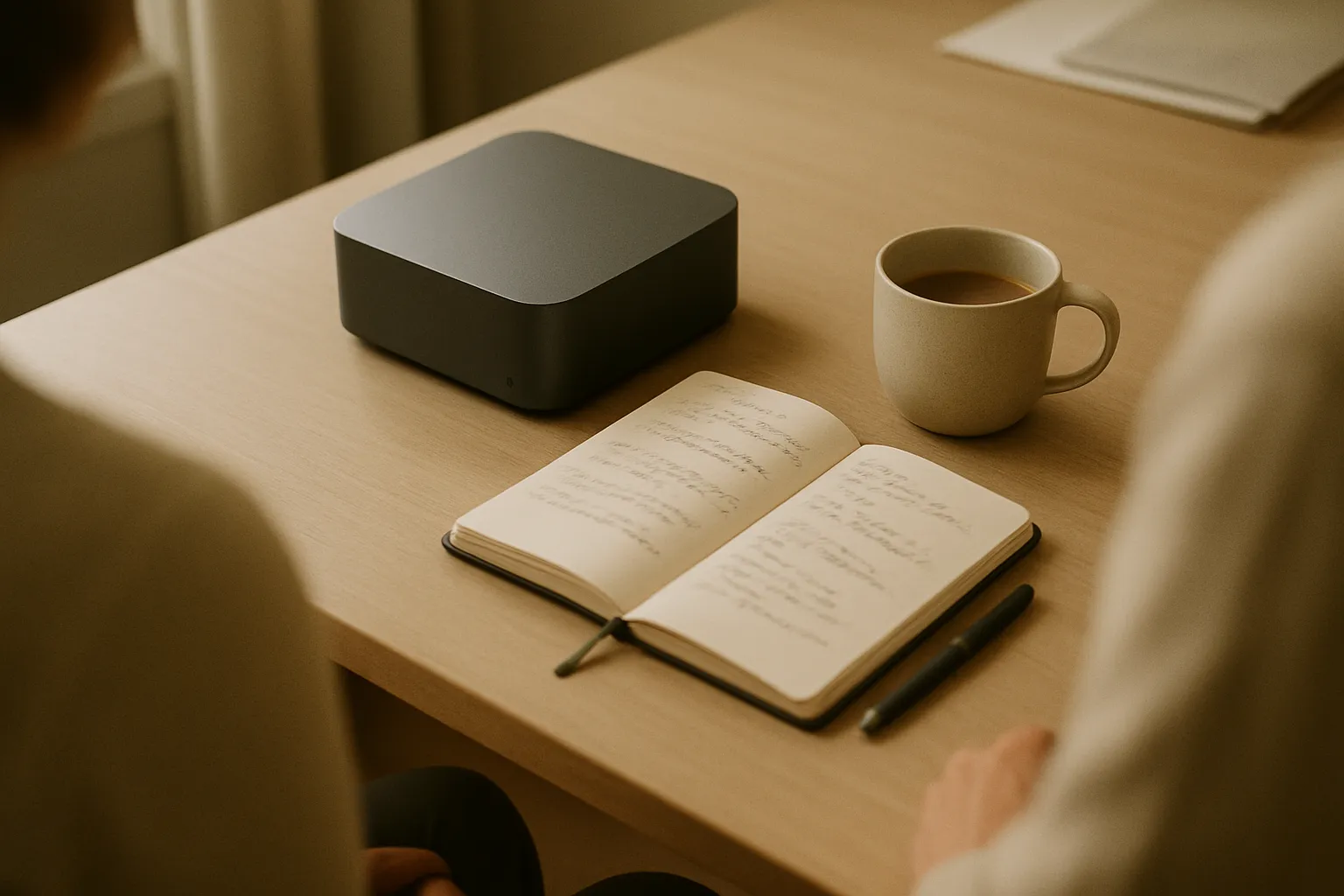
Nvidia just showed off RTX Spark as its first all-in-one SoC for consumer PCs: a single chip packing an ARM CPU, Blackwell GPU, and AI engine. It's hitting stores in autumn 2026.
For decades Nvidia sold discrete graphics cards — add-on components to be plugged into an already built PC. With RTX Spark it changes category: it produces a SoC (System on Chip, meaning a single chip that contains everything needed to make a computer run). The same approach used by Apple with its M-series chips.
The original source of the announcement is The Verge , quoting Mark Aevermann, senior director of product management at Nvidia: RTX Spark is supposedly "the most efficient PC chip ever made." No benchmarks to back that up, yet.
Confirmed technical details, according to Wikipedia / Nvidia RTX Spark , concern the N1X variant: 20-core ARM v9.2 Grace CPU, Blackwell GPU with 6,144 CUDA cores (the parallel computing cores on which the Nvidia ecosystem is based), up to 128 GB of unified LPDDR5X memory, and a declared AI power of 1 petaflop in FP4 format. The TDP — that is, the maximum power consumption — ranges from 45 to 80 W. Production is entrusted to TSMC with a 3 nm process, the same node used by the most advanced chips on the market today.
| Feature | RTX Spark N1X | Notes |
|---|---|---|
| CPU | Grace, 20 ARM v9.2 cores | ARM architecture, not x86 |
| GPU | Blackwell, 6.144 CUDA cores | Same family as Nvidia professional GPUs |
| Unified memory | up to 128 GB LPDDR5X | CPU and GPU share the same RAM |
| Declared AI power | 1 petaflop (FP4) | Nvidia data, not yet verified by independent tests |
| Power consumption (TDP) | 45–80 W | Variable based on usage profile |
| Manufacturing process | TSMC 3 nm | Most advanced production node available |
| Announced variants | N1 and N1X | Mainstream tier and performance tier |
The chip is based on the GB10 architecture, already present in the DGX Spark module — Nvidia's compact workstation for local AI inference. This means that RTX Spark is not a scaled-down version of something professional: it's the same architecture brought to the laptop and mini-PC segment.
Who will manufacture the devices with RTX Spark and when are they coming?
By the autumn 2026 launch, over 30 laptop designs and about 10 desktops will be available, produced by the world's leading brands.

According to tech-insider.org, at launch RTX Spark devices will be available from ASUS, Dell, HP, Lenovo, Microsoft Surface, and MSI. Acer and GIGABYTE will join later. This is not a niche launch: coverage from major global manufacturers suggests Nvidia is aiming for rapid and widespread adoption.
| OEM Manufacturer | Launch availability | Expected segment |
|---|---|---|
| ASUS | Yes | Consumer and business |
| Dell | Yes | Business and workstations |
| HP | Yes | Business and consumer |
| Lenovo | Yes | Business and ThinkPad |
| Microsoft Surface | Yes | Premium productivity |
| MSI | Yes | Performance and gaming |
| Acer | Coming soon | Consumer and mid-range |
| GIGABYTE | Coming soon | Performance |
The prices of the individual devices have not been announced yet. For anyone managing business purchases, this is a critical detail: without a price list, it is not possible to compare the cost per unit with the alternatives already available from Intel, AMD, and Qualcomm.
How does RTX Spark compare to competitor chips already on the market?
RTX Spark enters a market dominated by Intel and AMD (87% of AI laptop revenue in 2025) and a fast-growing Qualcomm. Nvidia's claimed advantage is on-device AI power; the limitation, for now, is the lack of independent benchmarks.
In 2025, Intel and AMD x86 chips still held 87% of revenues in the AI laptop segment, according to Persistence Market Research . Qualcomm with Snapdragon X is the fastest-growing segment, thanks to energy efficiency and Copilot+ certification (Microsoft's standard for AI PCs, which requires at least 40 TOPS of neural power).
Nvidia enters this market with a distinct structural advantage: the CUDA ecosystem. Anyone developing with AI models, rendering pipelines, or data analysis tools already knows Nvidia GPUs. RTX Spark brings that familiarity to an integrated, low-power format.
To dive deeper into how the competition is moving in the AI chip segment, the article on AWS and the challenge to Nvidia on AI chips for data centers offers a useful overview of broader market dynamics.
| Chip / Platform | Architecture | Strength | Weakness vs RTX Spark |
|---|---|---|---|
| Nvidia RTX Spark N1X | ARM + Blackwell GPU | On-device AI power, CUDA ecosystem | No independent benchmarks yet |
| Intel Core Ultra (Lunar Lake) | x86 | Total software compatibility with Windows | AI power below petaflop |
| AMD Ryzen AI (Strix Point) | x86 | Competitive price, mature ecosystem | Lower energy efficiency than ARM |
| Qualcomm Snapdragon X Elite | ARM | Energy efficiency, Copilot+ certification | Software compatibility still growing |
What actually changes for an Italian company: three concrete scenarios?
The impact depends on how your team already uses AI. The more processing happens locally, the more a chip like RTX Spark can make a difference in terms of speed and operating costs.
The three scenarios below are illustrative: the numbers are meant to show the reasoning, they are not real client data.
| Company type | Current AI usage | What changes with RTX Spark | Estimated advantage |
|---|---|---|---|
| Communication study (5-15 people) | Image and text generation via cloud API | Local processing: no API costs for repetitive tasks | Savings on AI subscriptions + faster execution speed |
| Manufacturing SME with a technical office | Structured data analysis on Excel, no local AI | Ability to run predictive analytics models on-device | Reduction in dependence on external consultants for data analysis |
| E-commerce with internal marketing team | Campaigns managed with cloud AI tools (Meta, Google) | Generation of visual assets and copy locally, without latency | Faster workflow, less waiting time on renders and reviews |
There's one common thread: the more your team processes data and AI content repetitively, the more a chip with integrated AI power reduces waiting times and variable costs related to external APIs. For those who only use AI occasionally through cloud tools, the advantage is less immediate.
Nvidia's roadmap on this front is already mapped out: the article on RTX Spark N2X and N3X roadmap towards voice AI shows where the platform is heading in upcoming cycles.
Is the Italian market ready for AI-ready hardware?
The Italian AI market is growing fast, but most SMEs haven't invested in artificial intelligence yet. The gap between the demand for skills and actual adoption is the real challenge to solve.
The Italian artificial intelligence market reached 1.8 billion euros in 2025, growing by +50% compared to the previous year, according to the Artificial Intelligence Observatory of the Polytechnic University of Milan . A clear sign that demand is there and growing.
On the business front, however, the picture is more complex. According to ISTAT data (Enterprises and ICT 2025), reported by Key4biz , the adoption of AI in Italian businesses with at least 10 employees went from 5% in 2023 to 16.4% in 2025. A doubling in two years, but with a clear gap: SMEs stop at 15.7%, compared to 53.1% for large enterprises.
According to the 2025-2026 Research by the Digital Innovation in SMEs Observatory of the Polytechnic University of Milan , 76% of Italian SMEs have not invested nor plan to invest in AI, and only 7% have started structured training programs. A figure that explains why AI-ready hardware alone is not enough: you also need the ability to use it.
The Bank of Italy (March 2026) estimates that in companies with at least 50 employees, AI adoption is associated with an 11.9% increase in productivity. The potential is there. The problem is that many SMEs are not yet building the skills to seize it.
What risks and unknowns should you keep in mind before deciding?
RTX Spark brings some concrete unknowns that every purchasing manager should evaluate before planning an investment.
The first risk is that of missing benchmarks. Nvidia has stated that RTX Spark is "the most efficient chip ever built," but has not released any comparative data. No tests, no reference metrics. This is not unusual for an anticipatory announcement, but it calls for caution from those who have to justify hardware spending to a board of directors or a purchasing department.
The second risk concerns software compatibility. Qualcomm faced significant challenges with Snapdragon X in the early months of its launch: many Windows applications were not optimized for the ARM architecture. Nvidia will have to manage the same transition. The CUDA ecosystem is an advantage for AI developers, but it doesn't guarantee that all business productivity tools will work smoothly from day one.
For those following chip supply chain dynamics, the article on ASML and chip export tensions offers useful context on the sector's structural risks.
| Risk | Probability | How to manage it |
|---|---|---|
| Real benchmarks lower than declared | Media | Wait for independent reviews from Tom’s Hardware, AnandTech, Notebookcheck |
| Software compatibility limited at launch | High | Check that critical corporate software has native ARM versions |
| Higher prices than x86 alternatives | Media | Compare 3-year TCO (Total Cost of Ownership), not just the purchase price |
| Cannibalization with discrete Nvidia GPUs | Low | Different segments: RTX Spark is for laptops and mini-PCs, not tower workstations |
| Delays in commercial launch | Low-medium | Plan your hardware refresh with a 2-3 month buffer compared to the announced date |
How to get started practically: the steps to evaluate RTX Spark for your company?
You don't need to decide today. You need to build an evaluation process that allows you to decide well when the data is available.
- 1 · IT Manager / Procurement Map your team's AI workloads List which tasks already use AI (text generation, images, data analysis) and how many happen via cloud vs. locally. This determines how much of a real advantage RTX Spark would give you.
- 2 · IT Manager Check critical software compatibility with ARM Check that the ERPs, CRMs, and productivity tools you use have native versions for the ARM architecture. If they don't, the compatibility risk is real.
- 3 · Procurement / CFO Plan hardware refresh cycle If renewal is expected by Q3 2026, evaluate already available alternatives. If it's expected for Q4 2026 or 2027, put RTX Spark on the shortlist and wait for the benchmarks.
- 4 · IT Team Monitor independent reviews Keep an eye on reviews from tech sites (Tom's Hardware, Notebookcheck, AnandTech) once the first devices drop. They're your best bet for seeing how things actually perform.
- 5 · Management Consider TCO, not just price Total cost of ownership covers device price, training costs, lower cloud API bills, and boosted productivity. A pricier chip might actually save money over three years.
What are the most common mistakes to avoid at this stage?
Most mistakes stem from deciding too early or too late, and from confusing stated specs with real-world performance.
- Buy immediately at launch without benchmarks. The first devices of a new platform often have driver, compatibility, and software optimization issues. Waiting 2-3 months from launch reduces the risk.
- Ignore ARM compatibility. If your critical business software doesn't have native ARM versions, you might end up with a powerful chip and apps running in emulation — slower than a traditional x86.
- Compare only declared AI power. 1 petaflop in FP4 is an impressive number, but real performance depends on how software uses that power. A benchmark on an app you actually use is worth more than any tech specs.
- Do not consider training. AI-ready hardware without trained staff is a waste. 7% of Italian SMEs have structured AI training programs: if you are among the remaining 93%, start there.
- Waiting for perfection. The perfect hardware doesn't exist. If your team needs more AI power right now, the alternatives from Intel, AMD, and Qualcomm already on the market are mature and tested products.
How to figure out if your hardware choice is really working for your business?
Three months after the hardware refresh, you should be able to measure the impact on operational speed, costs, and the quality of the work produced.
| Indicator | How to measure it | Positive signal |
|---|---|---|
| Average time for repetitive AI tasks | Time 5 tasks before and after renewal | Reduction ≥30% compared to the previous device |
| Monthly cloud API costs | Compare cloud invoice before and after | Visible reduction if processing has been moved on-device |
| Number of AI tasks completed per week | Logs of AI tools used by the team | Increase if the chip reduces waiting times and freezes |
| Team satisfaction (internal NPS) | Anonymous quarterly survey | Score growing compared to the previous period |
| Software compatibility incidents | Open IT tickets for software issues | Zero or rapidly decreasing after the first 30 days |
So, is it worth it for your company?
It is worth it if your team already uses AI extensively (content generation, data analysis, rendering) and the hardware refresh is planned for late 2026 or 2027. In that case, wait for independent benchmarks and then consider RTX Spark as your top choice.
A middle ground you use AI occasionally or are just starting to set up your AI workflows. Put RTX Spark on your shortlist, but also consider the already mature x86 alternatives if you need to upgrade before autumn.
Not yet if your machine fleet has been recently updated, critical business software doesn't have native ARM versions, or your team doesn't yet have structured AI skills. In this case, invest in training first and wait for the second generation of RTX Spark devices.
How we see it at SHM
For us, AI-ready hardware is a means, not an end. RTX Spark is a technically relevant announcement — a petaflop of AI power in a laptop is a real leap from what was available three years ago. But 76% of Italian SMEs have not yet invested in AI, and 93% do not have structured training programs. Buying a more powerful chip without having the processes and skills to use it is like buying a race car for city deliveries.
We believe technology should be integrated to free companies from routine, not to impress suppliers. That's why, when working with our clients on the Strategic AI integration , let's always start from real workflows — not chip specs.
If you are evaluating how to structure your company's AI processes before deciding on hardware, our service of AI training for businesses and that of Business Process Automation are the most useful starting point. For those who want to understand how AI is reshaping the chip market more broadly, the article on Nvidia N1X and the new era of enterprise laptops completes the picture.
Find more insights on hardware, AI, and digital process management in the area Project management and technology of our blog.
Frequently Asked Questions
The commercial launch is scheduled for autumn 2026. The first devices will be made by ASUS, Dell, HP, Lenovo, Microsoft Surface, and MSI, with Acer and GIGABYTE following later. Prices have not been announced yet.
RTX Spark uses an ARM architecture, not x86. This means that software not optimized for ARM might run in emulation, with reduced performance. Before buying, check that your management software and productivity tools have native ARM versions.
Nvidia claims 1 petaflop of AI power in FP4 format, a value higher than that of current Intel Core Ultra and AMD Ryzen AI chips. However, at the time of the announcement, no independent benchmarks were published: the definitive evaluation will come with tests of the first commercial devices.
If you mainly use AI through cloud tools like ChatGPT or Microsoft Copilot, the advantage of a built-in AI chip is less immediate. The main benefit of RTX Spark is local processing: faster, with no variable API costs. If your AI workloads are limited, already available x86 alternatives are a safer choice.
Map your team's AI workloads, check ARM compatibility for your critical software, and plan your hardware refresh cycle. If a refresh is urgent, consider already available alternatives. If you can wait until late 2026 or 2027, put RTX Spark on your shortlist and wait for independent benchmarks.
Not immediately. RTX Spark is designed for thin-and-light laptops and mini-PCs, not for high-performance workstations. Those who need powerful discrete GPUs (professional 3D rendering, complex simulations) will continue to use dedicated solutions. The two segments are complementary, not in direct competition.
The most efficient chip of 2026 isn't the one with the highest specs on paper, but the one your team actually knows how to use.
Related articles
Discover more articles exploring similar topics, selected to offer you a more complete and stimulating perspective. Each piece of content is carefully chosen to enrich your experience.




























































