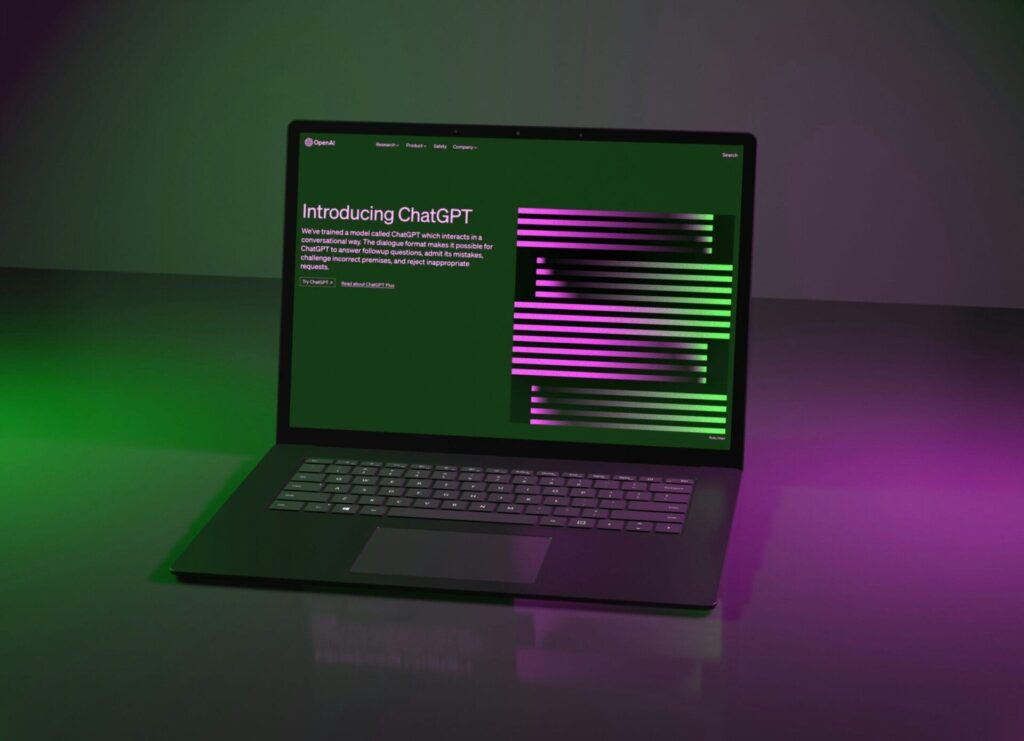

- The context: GPT-5.6 officially enters the Microsoft ecosystem
- What has changed compared to the previous version
- The OpenAI–Microsoft partnership: solid despite the rumors
- Immediate impact on enterprise AI strategies
- The still open construction site: limits and cautions to consider
- What to do now: operational guidelines for marketing managers
- Outlook: where enterprise AI is heading in 2027
OpenAI has officially stated that GPT-5.6 is the preferred model for powering Microsoft Copilot 365. The news comes at a time of tension between the two companies, with rumors of a possible scaling back of the partnership. However, the technical confirmation clarifies that the Microsoft productivity suite will continue to be based on the OpenAI family of models.
For Italian companies, especially SMEs and mid-market businesses, this update isn't a minor detail. In fact, Copilot 365 is now integrated into Word, Excel, Teams, and Outlook: everyday tools for millions of business users. Consequently, a generational leap in the underlying model translates into more advanced reasoning capabilities, more accurate text outputs, and more reliable workflow automations.
In summary, those who have already adopted Copilot 365 will automatically benefit from superior performance. Those who are instead considering integrating AI tools into business processes should consider this update as a sign of the platform's maturity. We at SHM Studio we keep an eye on how these ecosystems grow to give our clients up-to-date strategic tips on <a href=
The context: GPT-5.6 officially enters the Microsoft ecosystem
In July 2026, OpenAI confirmed that GPT-5.6 is the preferred model for Microsoft Copilot 365. The news, reported by TechCrunch , arrives as rumors circulate about possible friction between the two companies. However, on a technical level, the message is clear: the OpenAI family of models continues to be the engine of Microsoft's entire productivity suite.
This update isn't just for AI enthusiasts. It directly concerns those who use Teams, Outlook, Word, and Excel daily in the company. Therefore, understanding its operational implications is a priority for any marketing manager or digital manager.
What has changed compared to the previous version
GPT-5.6 belongs to the new family of OpenAI models, designed to offer capabilities of reasoning deeper than previous iterations. In particular, the model shows significant improvements in understanding long context, output consistency, and handling complex multi-step instructions.
For Copilot 365, this translates into some concrete differences. First, the quality of automatic summaries in Teams becomes more accurate. Additionally, drafting functions in Outlook produce texts that are more aligned with the company's tone. Finally, data analysis in Excel using natural language becomes more reliable, even on complex datasets.
So, it is not just a minor update. It is a huge performance boost that directly impacts the quality of AI-assisted work.
The OpenAI–Microsoft partnership: solid despite the rumors
In recent months, some rumors have fueled the hypothesis of a loosening partnership between OpenAI and Microsoft. Reasons cited include OpenAI's growing strategic autonomy and Microsoft's desire to diversify its AI model suppliers.
Still, the choice of GPT-5.6 as the go-to model for Copilot 365 shows that, at least for now, the partnership is holding strong. According to analysis by Gartner , large enterprise platforms tend to maintain consolidated partnerships with AI providers to ensure continuity and compliance. Consequently, any break would require long lead times and have significant impacts on the product roadmap.
For companies that have invested in Microsoft 365 licenses with Copilot, this is a reassuring sign. The AI infrastructure they rely on will not change in the short term.
Immediate impact on enterprise AI strategies
Those managing digital strategies in companies should read this update on two levels. The first is operational: Copilot 365's features improve without requiring user action. The second is strategic: GPT-5.6 raises the benchmark for evaluating other AI tools on the market.
Specifically, for marketing teams, this means being able to delegate more complex tasks to Copilot. For example, generating creative briefs, analyzing performance reports, or summarizing market research. Similarly, sales teams can leverage more precise CRM intelligence features within the Microsoft ecosystem.
We at SHM Studio we observe that many Italian SMEs already use Microsoft 365 as their main infrastructure. Therefore, integrating Copilot with GPT-5.6 represents a concrete automation opportunity without having to adopt external platforms.
The still open construction site: limits and cautions to consider
Despite evident progress, some critical issues remain open. First and foremost, the quality of Copilot's outputs heavily depends on the quality of the company data it operates on. A more powerful model cannot compensate for poorly structured data or incomplete knowledge bases.
Furthermore, the issues of data governance and compliance remain key. Italian companies must make sure that data flows to Microsoft services follow current GDPR rules. According to Harvard Business Review , data governance is the main obstacle to AI adoption in enterprise organizations.
Finally, the risk of over-reliance the tool is real. Teams that delegate too much to Copilot without human supervision can produce standardized outputs lacking competitive differentiation. Therefore, technology should be understood as a skill amplifier, not a substitute.
What to do now: operational guidelines for marketing managers
For those managing marketing and communication activities, GPT-5.6 in Copilot 365 opens up concrete scenarios. Below are some operational priorities to consider immediately.
- Active license audit: make sure your Microsoft 365 licenses include Copilot and are updated to the version running GPT-5.6.
- Team training: invest in specific prompt engineering sessions for Microsoft tools. A more capable model requires more precise instructions to express its potential.
- Integration with SEO and content workflows: Copilot can help with content creation, but it needs to go hand in hand with a solid content strategy. Because of this, the SEO copywriting remains an irreplaceable human skill.
- Marketing automation evaluation: explore how Copilot integrates with active campaigns, for example through the synthesis of reports from Google Ads or performance analysis on Linkedin .
In addition to this, it is useful to map internal processes that currently take more time and check which ones can benefit from assisted automation. This exercise helps to define concrete adoption priorities, avoiding superficial implementations.
Outlook: where enterprise AI is heading in 2027
The rollout of GPT-5.6 for Copilot 365 is just one piece of a bigger puzzle. The enterprise AI market is changing fast. According to forecasts by McKinsey , by 2027 over 70% of large organizations will have integrated generative AI tools into their core processes.
For Italian SMEs, the risk isn't adopting too much AI. On the contrary, it's falling behind while competitors optimize costs and output quality. Therefore, the window to build internal skills and experiment with tools like Copilot is open now.
In this scenario, the role of digital partners like SHM Studio becomes that of supporting companies in defining a AI strategy consistent with business goals. It's not about adopting every new technology. It's about choosing the right tools, training people, and measuring results with concrete metrics.
To learn more about how to integrate AI tools into the workflows of Digital marketing , SEO or web development , the SHM Studio team is available for a preliminary consultation. It is possible contact us directly or explore the Blog for further analysis on the AI and digital landscape.
Related articles
Discover more articles exploring similar topics, selected to offer you a more complete and stimulating perspective. Each piece of content is carefully chosen to enrich your experience.